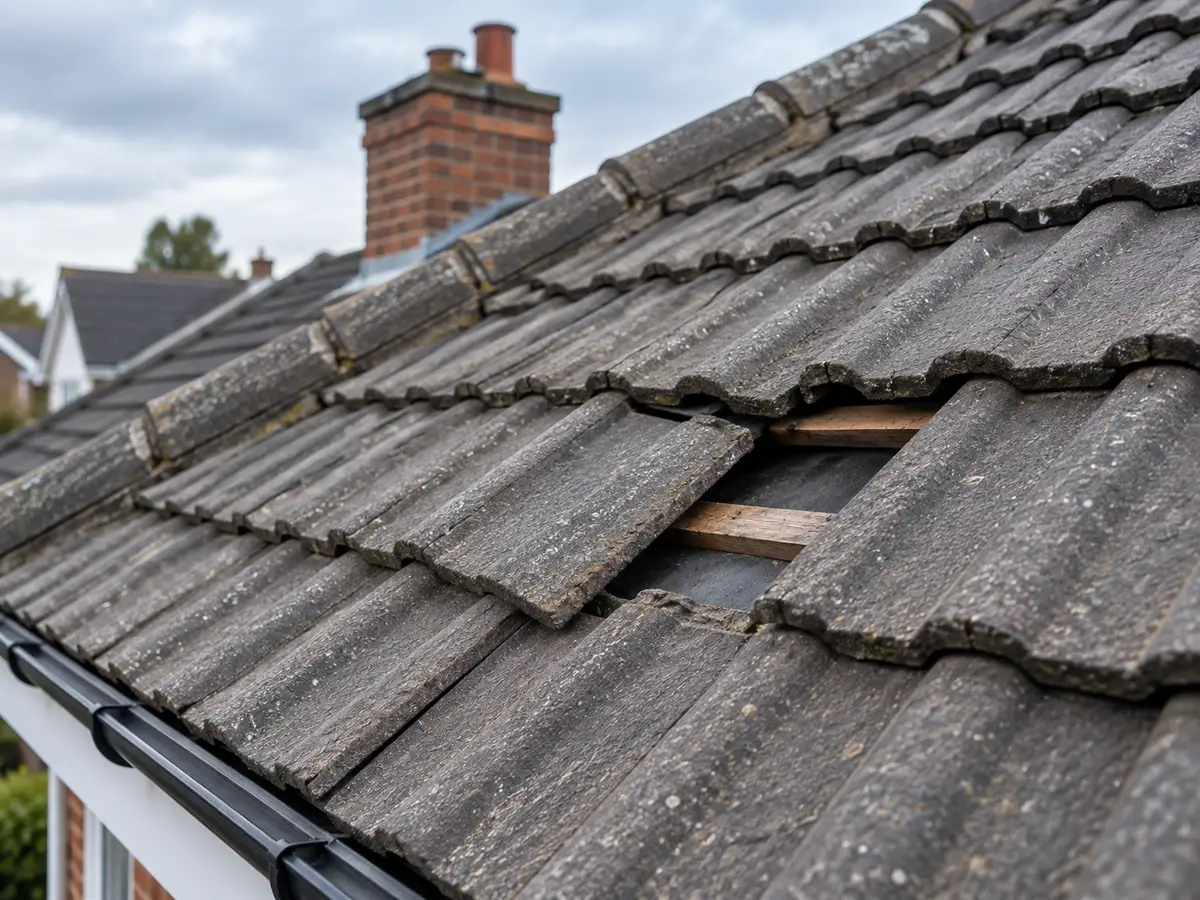
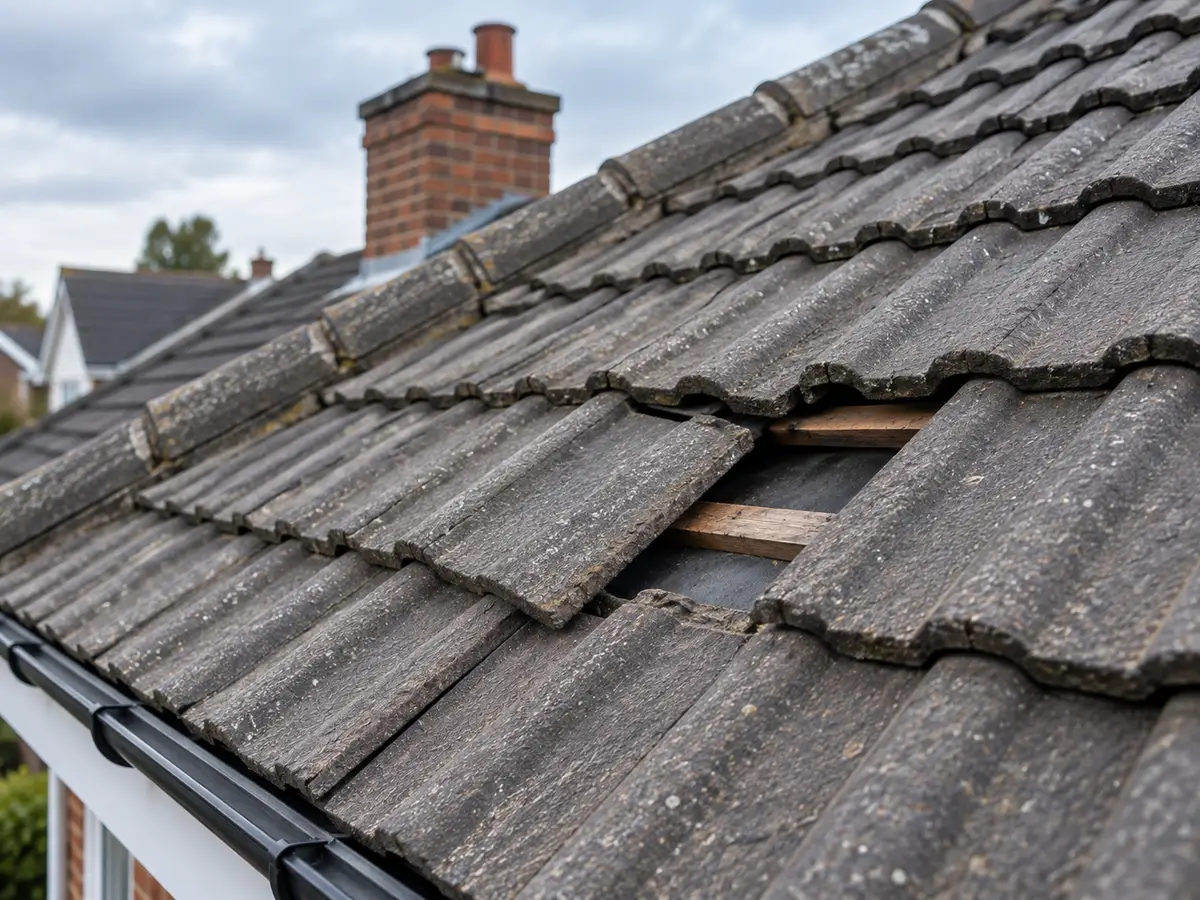
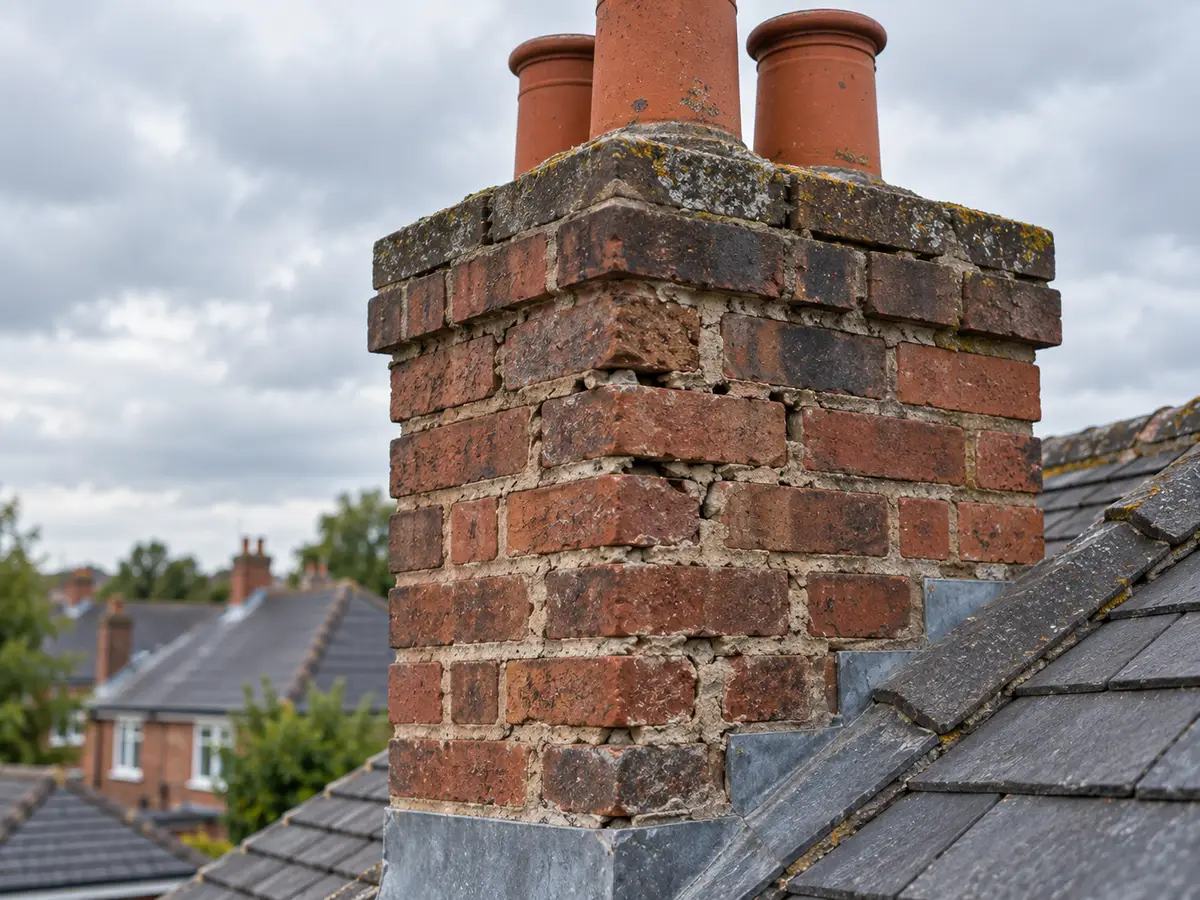
Guttering & Fascias Explained: Blockages, Leaks and When to Replace
By RoofEnquiry Editorial · Updated 23 September 2026 · 11 min read
Quick answer
- Most guttering problems trace back to one of three things: a blockage, a failed joint or bracket, or fascia/soffit damage underneath.
- Left unaddressed, guttering problems rarely stay contained to the guttering itself — overflow and damp commonly spread to fascias, walls and foundations.
- Clearing gutters once or twice a year, more often near trees, prevents a large share of the problems on this page before they start.
- A sagging or detached section usually means a repair; guttering that's failing in multiple places at once is more often a sign it's due a full replacement.
The unglamorous system that protects almost everything below it
Guttering doesn't get much attention until it stops working, which is exactly why it's worth a page of its own. Its job is simple to describe — catch the water running off the roof and direct it safely away from the building — but when that job isn't being done properly, the consequences show up in places that don't obviously look like a guttering problem: damp patches on walls, rotten timber at the eaves, even damp affecting foundations over time in persistent cases.
That's the general shape of this guide. Guttering, fascias and soffits are a genuinely important part of how a roof manages water, not just a cosmetic trim around the edge, and most of the problems that show up elsewhere on a property — a damp patch on an external wall, a rotten timber edge, a discoloured patch of brickwork — trace back to something going wrong up at roofline level long before anyone noticed.
What guttering, fascias and soffits actually do
| Part | What it does |
|---|---|
| Guttering | Channels rainwater running off the roof slopes towards the downpipes, rather than letting it fall straight down the walls |
| Downpipes | Carry the collected water down to ground level, usually into a drain or soakaway |
| Fascia boards | The vertical boards fixed to the ends of the roof rafters, which the guttering is usually attached to |
| Soffit boards | The horizontal boards underneath the roof overhang, closing off the gap between the wall and the roofline and often providing ventilation into the loft |
Not every property has all four in an obviously visible form — some older buildings have different detailing — but this is the general system most UK homes are built around.
It's worth knowing how these parts relate to each other, because problems in one commonly cause problems in another. Guttering is usually fixed directly to the fascia board, which means a guttering problem — a leak, extra weight from debris, water sitting somewhere it shouldn't — often ends up affecting the fascia it's attached to, and from there potentially the roof timbers and loft ventilation behind the soffit. None of these four parts really works in isolation.
The most common problem: blockages
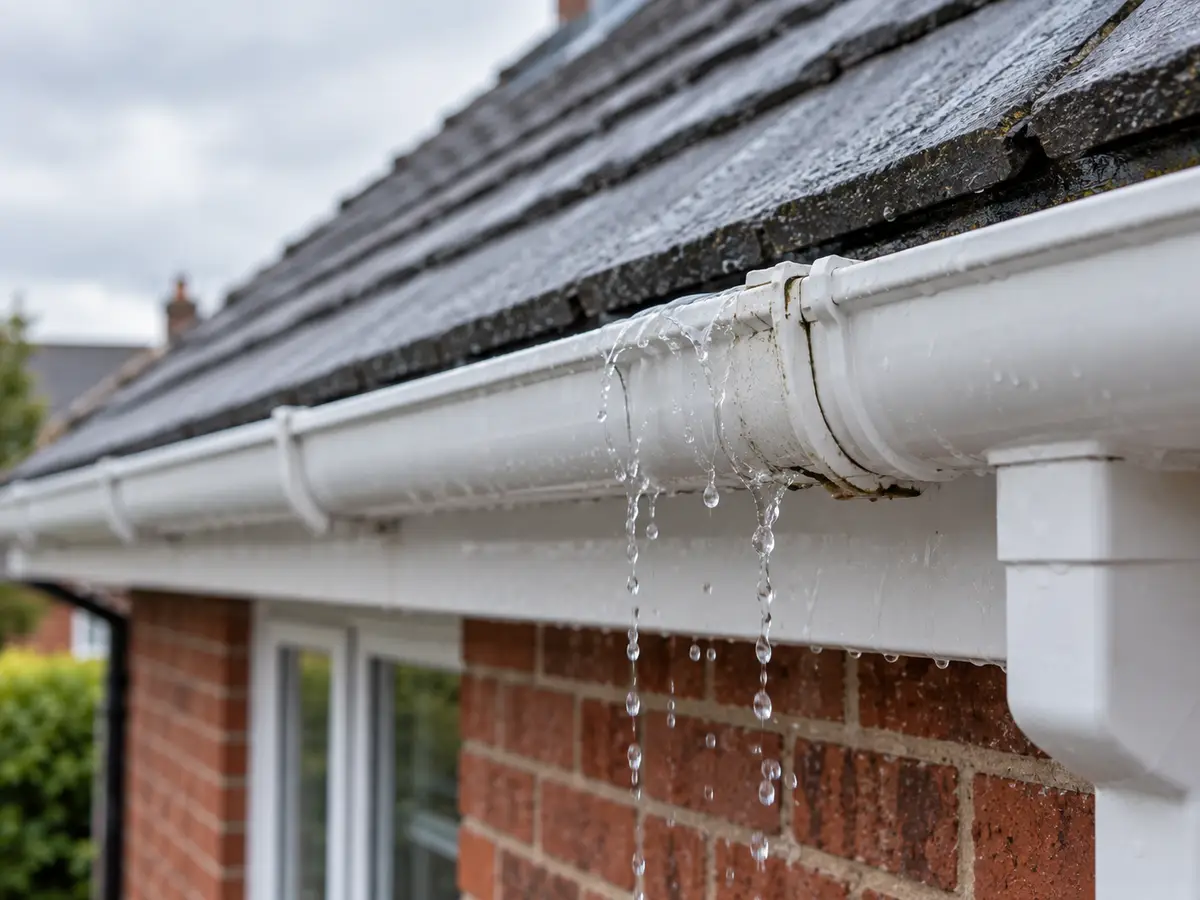
Blocked guttering is by far the most frequent issue, and it's also the most preventable. Leaves, moss, general airborne debris and, in some areas, nesting material all accumulate in guttering over time, and once a blockage builds up enough to stop water flowing freely towards the downpipe, water backs up and overflows over the front edge of the guttering instead.
- Water overflowing from the guttering during or after rain, visible as a small waterfall over the edge rather than draining normally.
- Plants, moss or visible debris sitting in the guttering, sometimes visible from an upstairs window without needing a ladder.
- Staining or damp patches on the wall directly below a section of guttering, where overflow has been running down the brickwork.
- A slightly different sound during rain — a blocked section often sounds noticeably different (a splashing overflow rather than a controlled flow into the downpipe) to someone who knows what their guttering normally sounds like.
Properties near mature trees are particularly prone to this, which is exactly why Enfield and Southgate's tree-lined residential streets tend to see more seasonal blockage-related enquiries than areas with fewer overhanging trees. If that sounds like your street, autumn is worth treating as a specific checkpoint rather than relying on a once-a-year general check.
Leaks and failed joints
Guttering is usually made up of multiple sections joined together, and those joints — along with the brackets holding the whole run to the fascia — are the most common points of failure once blockage is ruled out. Joint seals degrade over time, particularly on older cast iron or early plastic guttering, and once a seal fails, water drips from that specific point rather than reaching the downpipe.
A leak at a joint is usually easy to spot once you know what you're looking for: a consistent drip or damp trail from one specific point along a run, rather than overflow along a whole length, which points more towards a blockage further along. This distinction is genuinely useful to mention if you end up describing the problem to a roofing professional, since a leak and a blockage are diagnosed and fixed differently.
Sagging or detached sections
Guttering needs a very slight, consistent fall along its length so that water actually flows towards the downpipe rather than sitting still. When a bracket fails, or several brackets weaken with age at a similar rate, a section can sag, which does two things at once: it disrupts that fall (so water sits and stagnates in the low point, adding weight and accelerating further sagging) and it puts the whole section at greater risk of coming away from the fascia entirely, particularly under the extra weight of standing water or debris.
- A visibly uneven, dipping section along an otherwise straight run of guttering.
- A section that's pulled slightly away from the fascia board, sometimes visible as a small gap where there shouldn't be one.
- Water pooling and staying visible in one section for a while after rain has stopped, rather than draining away.
- In more advanced cases, an entire length of guttering hanging loose or having come away completely — most likely after storm damage or high winds on an already-weakened section.
A single sagging section is usually a straightforward, contained repair — refitting or replacing a bracket, or a short section of guttering. Multiple sagging sections across a run, especially on older guttering, more often points towards the whole system reaching the end of its working life rather than one isolated fault.
Fascia and soffit damage
Fascia and soffit boards don't fail on their own very often — they usually fail because something above them (a guttering leak, overflow, or trapped moisture) has been affecting them for a while without being addressed. Timber fascias are particularly vulnerable to rot once moisture gets behind or underneath them, since that's exactly the kind of damp that doesn't dry out quickly compared with rain hitting an exposed, well-ventilated surface.
| Sign | What it can indicate |
|---|---|
| Cracked, rotten or peeling fascia boards | Trapped moisture, often from a guttering leak or overflow that's been present for some time |
| Paint or coating visibly failing on fascias | Can be simply cosmetic ageing, or an early sign of moisture getting underneath the surface |
| Soffit boards sagging or showing gaps | Potential water ingress into the loft space via the eaves, worth checking against loft ventilation and damp signs |
| Visible daylight gaps at the soffit | Sometimes intentional (ventilation), sometimes a sign of damage — worth distinguishing rather than assuming either |
Rotten or damaged fascia boards matter beyond how they look, because they can allow water to track further into the roof structure and eaves — which is exactly why it's generally worth having fascias looked at alongside any guttering issue, rather than treating the guttering as a separate job from what it's attached to.
Materials: what your guttering is likely made of
Most UK homes built or re-roofed from roughly the 1970s onwards have uPVC (plastic) guttering, which is lightweight, doesn't rust, and doesn't need painting — the most common material a roofing professional will be working with today. Older properties, particularly Victorian and Edwardian ones, more frequently have cast iron guttering, which is heavier, more traditional in appearance, and generally needs periodic repainting to prevent rust, but can also last a very long time when properly maintained. Aluminium guttering is a less common third option, sometimes chosen for its durability and low maintenance on higher-spec properties.
None of this is essential detail to know before contacting a roofing professional — like the roof covering itself, guttering material is something a professional can identify quickly from a photo or a visit — but it's genuinely useful context if you're weighing up a repair against a fuller replacement, since matching an existing cast iron system, for instance, is generally a different job to replacing a standard uPVC run.
One detail worth knowing regardless of material: guttering profile and size vary too, not just what it's made of. A larger roof area sheds more water in heavy rain, and guttering sized for a smaller roof can overflow simply from being undersized for the job, even with no blockage or damage at all. This is one reason a straightforward-looking overflow occasionally turns out not to be a fault to repair, but a system that was never quite matched to the roof it's serving — worth mentioning if a problem persists despite clear guttering and sound joints.
How often to check and clear your guttering
This depends on nearby trees and your local environment, but many homeowners have guttering checked and cleared at least once or twice a year to prevent blockages — broadly the same rhythm as the rest of a sensible roof-maintenance routine. Properties surrounded by mature trees, particularly anything overhanging the roofline directly, generally benefit from checking more often, since leaf and debris build-up happens faster than on a more exposed, tree-free property.
It's worth being honest about the limits of a DIY check here, too. Looking at guttering from ground level or an upstairs window is a reasonable way to spot overflow, obvious sagging or visible debris, but actually clearing a blockage means working at height along the guttering itself — which isn't something to attempt from a ladder propped against the wall. It's a genuinely common cause of serious injury around the home, and it's exactly the kind of job a roofing professional has the right equipment and experience to do safely.
Repair, or time for a full replacement?
As with roof coverings more generally, there's a rough tipping point where repeated small repairs stop making financial sense compared with replacing the whole run, but it depends on the overall condition rather than a fixed age. A single sagging bracket or one leaking joint on an otherwise sound system is straightforwardly worth just repairing. Guttering that's needed several separate repairs across different sections in the space of a year or two — particularly older cast iron guttering nearing the end of a long working life — is a different conversation, and one where a full replacement often ends up more cost-effective than continuing to patch individual failures as they appear.
A useful practical signal: if a roofing professional looking at one specific fault mentions that other sections nearby look similarly aged or are showing early signs of the same problem, that's worth taking seriously as an indicator that the whole system is approaching the end of its working life together, rather than failing in one isolated spot.
It's also worth thinking about this alongside anything else planned for the property. If a re-roof or a full repaint of fascias and soffits is already on the horizon, replacing tired guttering at the same time is often more cost-effective than doing it as a separate job later — sharing access equipment and labour across jobs that would otherwise each need their own visit and, in some cases, their own scaffolding.
General UK price ranges
Indicative UK guttering price ranges
| Job | Typical UK range | What it usually includes |
|---|---|---|
| Guttering repair or partial replacement | £150 – £600 | Refitting, resealing joints, or replacing a short run |
| Full guttering replacement (whole property) | £800 – £2,000 | New uPVC guttering, downpipes and fixings around the property |
Indicative UK ranges only, excluding VAT unless stated. Actual prices depend on property size, guttering material, access, and the specific roofer — always get an itemised quote for your job. See {{guide:how-much-does-roof-repair-cost-uk|our full cost guide}} for the wider set of roofing price ranges these are drawn from.
Matching an existing material — cast iron in particular — or working on a property with restricted access (a shared driveway, no space for a scaffold tower) can push a job towards the higher end of these ranges. If you'd rather skip the table and get a number for your specific job, our free cost calculator gives an instant indicative range built from these same figures.
Getting it looked at
Whether you're dealing with an obvious overflow, a specific leak, or simply want an opinion on whether your guttering is worth repairing or replacing, the details that help most are the same ones that help with any roofing enquiry: which side of the property is affected, whether it's a blockage, a leak or physical damage, how long it's been happening, and any photos you can safely take from ground level. Our guide on what information to give a roofer covers this in more general detail, and the same principles apply directly here.
Frequently Asked Questions
How often should guttering be cleared?+
This depends on nearby trees and your local environment, but many homeowners have guttering checked and cleared at least once or twice a year to prevent blockages.
Can damaged fascias cause other problems?+
Yes — rotten or damaged fascia boards can allow water to track into the roof structure and eaves, so it's generally worth having them looked at alongside any guttering issue.
Is clearing guttering a job I could do myself?+
We'd always advise against accessing guttering at height yourself. A roofing professional will have the right equipment and experience to do this safely.
Why does my guttering overflow in one specific spot rather than along the whole length?+
This usually points to a localised blockage or a sagging section disrupting the fall at that specific point, rather than a problem with the whole system — worth mentioning the exact location when describing the issue.
Is cast iron guttering worth repairing rather than replacing with uPVC?+
Often yes, particularly on period properties where matching the existing appearance matters — cast iron can be repaired and repainted rather than replaced wholesale, though this depends on its overall condition. A roofing professional can advise based on what they find.
Can blocked guttering actually cause damp inside the house?+
Indirectly, yes — persistent overflow can saturate walls and, over time, contribute to damp appearing on internal walls near the affected area, particularly on solid-wall older properties without a cavity.
Does guttering need replacing when a roof is replaced?+
Not automatically, but it's a reasonable point to have it assessed, since guttering is disturbed during re-roofing work anyway and any existing weaknesses are easier to address at the same time rather than separately later.
What's the difference between a soffit and a fascia?+
The fascia is the vertical board at the end of the rafters, usually what the guttering is fixed to; the soffit is the horizontal board underneath the roof overhang, closing the gap between the wall and the roofline.
Can I tell if my guttering has the right fall without a professional?+
Not reliably — a slight fall of a few millimetres over several metres is difficult to judge by eye. Water regularly pooling in one section after rain has stopped is a more reliable ground-level sign than trying to assess the fall visually.
Does guttering colour or finish affect how long it lasts?+
Not significantly for uPVC, though poor-quality or heavily UV-exposed sections can fade or become slightly brittle with age. For cast iron, the paint or coating condition is more directly linked to how well the metal underneath is protected from rust.