What Information Should I Give a Roofer?
By RoofEnquiry Editorial · Updated 4 March 2026 · 10 min read

Quick answer
- Specifics beat generalities — 'a damp patch in the back bedroom ceiling since last week's storm' is far more useful than 'roof problem'.
- Photos from ground level, an upstairs window, or inside the loft give a genuinely useful starting point.
- Property type, age, and access details (like restricted parking) all shape how a job is quoted.
- Being clear about urgency — genuine emergency versus planning ahead — helps set expectations on both sides.
Why detail matters more than you'd think
A roofing professional working from "my roof has a problem" is starting from close to zero. One working from "a damp patch appeared in the back bedroom ceiling three days ago, roughly a foot across, and it's been raining heavily since" already has a working theory before they've even seen the property. The gap between those two descriptions is often the difference between a rough phone guess and something closer to an actual estimate.
This matters for a practical reason, not just a nice-to-have one: a roofer (or a platform matching you with one) can only work with what they're given. Vague information produces vague responses — a wide price range, a generic "we'll need to come and look" — while specific information lets someone form an actual initial view, and sometimes even flag whether it sounds like a quick job or something more involved, before a single visit has happened.
This isn't unique to roofing, either — it's the same reason a detailed symptom description gets a more useful response from a GP than "I don't feel well," or why a specific bug report helps a software developer more than "it's broken." Specificity is what turns a vague request into something someone can actually act on.
There's also a fairness dimension to this that's easy to overlook. A roofing professional reviewing several enquiries in a day will naturally engage more readily with the ones that give them enough to work with — not out of favouritism, but simply because a well-described enquiry is quicker and easier to respond to meaningfully than a vague one. Putting in a small amount of effort upfront genuinely improves your own odds of a useful, timely response.
None of this needs to feel like a chore, either. Once you know the handful of things that genuinely matter — what, where, when, how urgent, plus a photo or two — putting together a good enquiry takes a few minutes, not a lot of thought. The structure in this guide exists so you don't have to work that structure out yourself each time.
A side-by-side example
Vague vs useful descriptions
| Vague | Useful |
|---|---|
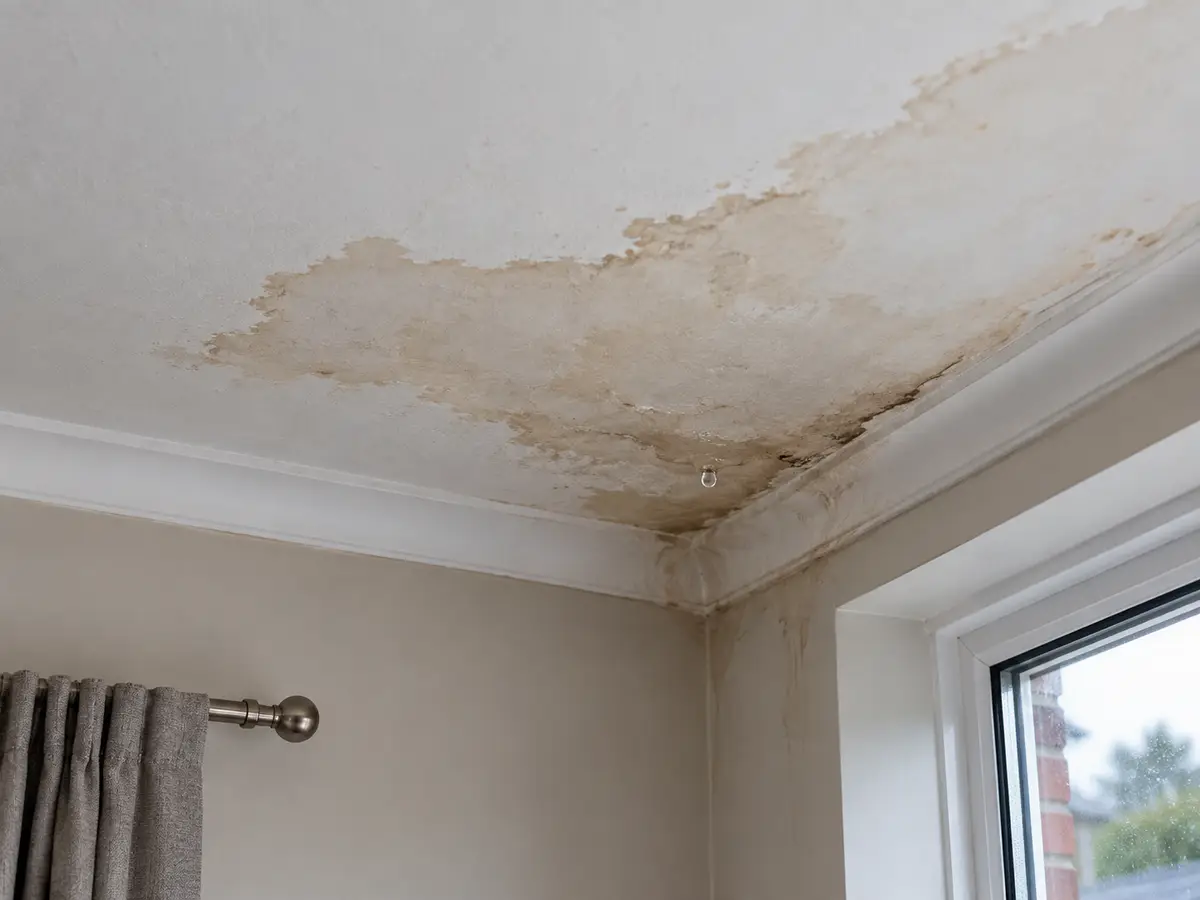
| "My roof is leaking." | "Water is dripping from the ceiling in the back bedroom, started yesterday evening during heavy rain, and it's a steady drip roughly every few seconds." |
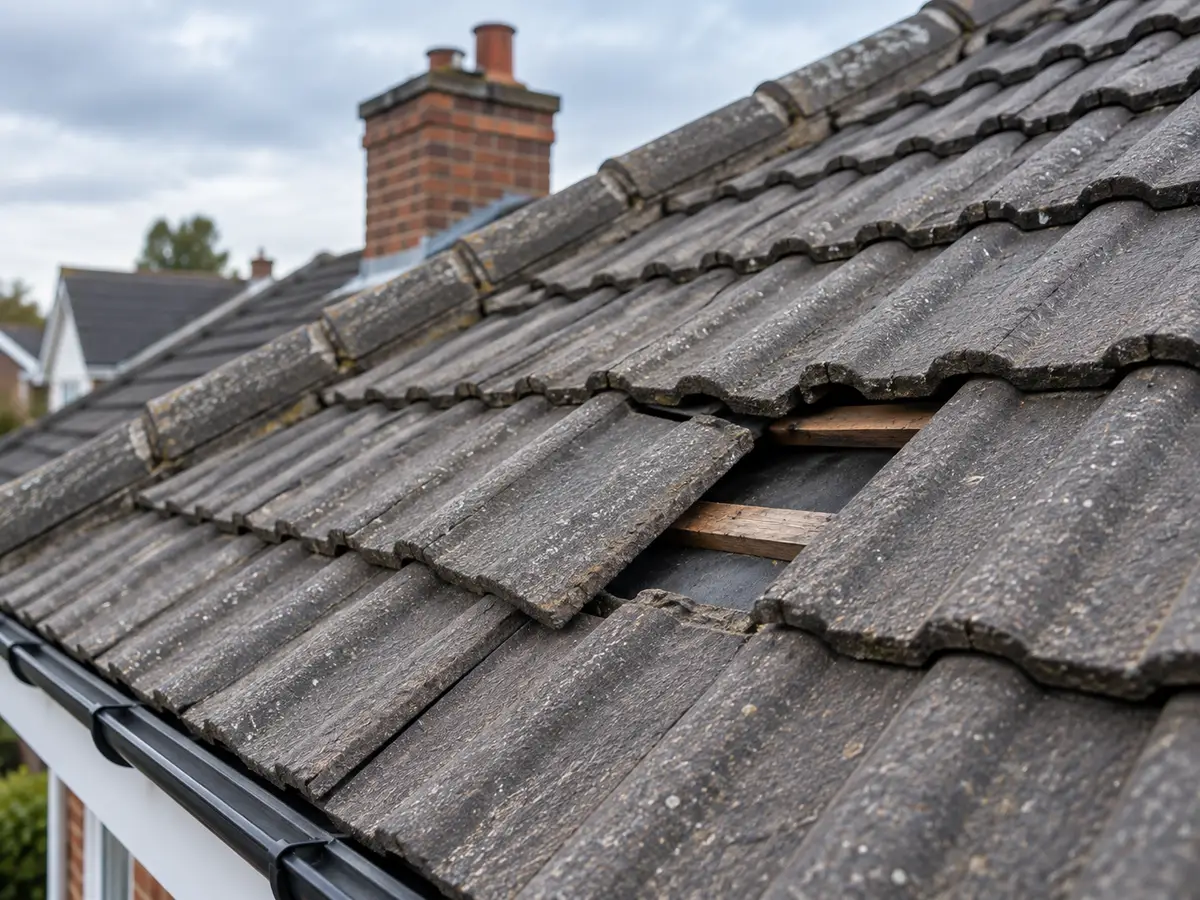
| "Some tiles fell off." | "Three or four tiles came off the front-facing slope after Tuesday's high winds — I can see a gap from the street, roughly in the middle of the roof." |
| "My chimney looks bad." | "The mortar between the bricks on the chimney stack looks crumbly and there are small gaps visible from the garden — no active leak that I've noticed." |
| "I need a new roof maybe." | "The roof is original to the house, which is about 45 years old, and we've had two separate tile repairs in the last 18 months." |
Describe the problem clearly
- What you've actually noticed — a leak, missing tiles, a specific stain, a smell, visible damage after a storm.
- Where on the property — which room, which side of the house, upstairs or downstairs.
- When it started, or when you first noticed it, and whether it's linked to weather.
- Whether it's getting worse, staying the same, or was a one-off.
- Anything you've already tried, such as a temporary bucket or tarpaulin.
Photos, taken safely
You don't need to access the roof to get useful photos — in fact, please don't. The most helpful shots are usually the easiest ones to take.
| Where from | What to capture |
|---|---|
| Ground level, front and back garden | The general roofline, any obviously missing or displaced tiles, chimney condition |
| An upstairs window | A closer angle on a specific section, if safely visible |
| Inside the loft (if safely accessible) | Daylight gaps, damp timber, staining on the underside of the roof |
| The affected room | The ceiling or wall damage itself, ideally a wide shot plus a close-up |
A photo often communicates in a second what would take several sentences to describe accurately — the exact colour and pattern of a stain, how many tiles look affected, the precise angle of a crack. It also removes a layer of subjective interpretation: two people might describe the same damp patch quite differently in words, but a photo shows the same thing to everyone who looks at it. If you're able to take even two or three relevant photos, it's usually worth the extra minute.
Property and access details
- Property type — house, bungalow, flat, or commercial premises.
- Roughly how old the property is, if known — this can hint at likely materials and construction.
- Number of storeys, which affects the access equipment needed.
- Anything relevant about access — a shared driveway, restricted parking, a locked gate, or a difficult-to-reach rear garden.
- Whether you're the homeowner, a landlord, a tenant, or managing the property on someone else's behalf — this affects who needs to be involved in decisions.
Timeframe and urgency
Being upfront about urgency helps set expectations on both sides. If water is actively coming into the property, say so clearly — that's meaningfully different from a roof that's simply overdue a general check. If you're planning ahead for a future project rather than dealing with a current problem, that's equally useful to state, since it changes what kind of response is actually helpful to you.
There's a version of this that's easy to get wrong in either direction — describing something as more urgent than it really is to try to get a faster response, or downplaying something that's actually quite urgent because you don't want to seem dramatic. Neither helps. An honest, accurate description of the actual urgency serves you better than either exaggeration in either direction.
What's specifically useful for different problem types
The core information — what, where, when, how urgent — applies to every enquiry, but a few extra details are particularly useful depending on the specific problem.
| Problem type | Extra detail worth including |
|---|---|
| {{service:leaking-roof|Leaking roof}} | Whether it's linked to rain, how it's changed over time, and roughly how much water (a slow drip vs steady flow) |
| {{service:roof-repair|General repair}} | How many tiles/slates appear affected, and whether the issue is localised or spread across the roof |
| {{service:chimney-repair|Chimney work}} | Whether the chimney is still in use (fire, stove or flue), and whether you've noticed any damp near the chimney breast inside |
| {{service:flat-roof|Flat roof}} | Roughly how old the roof is if known, and what material it appears to be (felt, GRP, or rubber) |
| {{service:storm-damage|Storm damage}} | When the storm occurred, and whether there's any active water ingress right now |
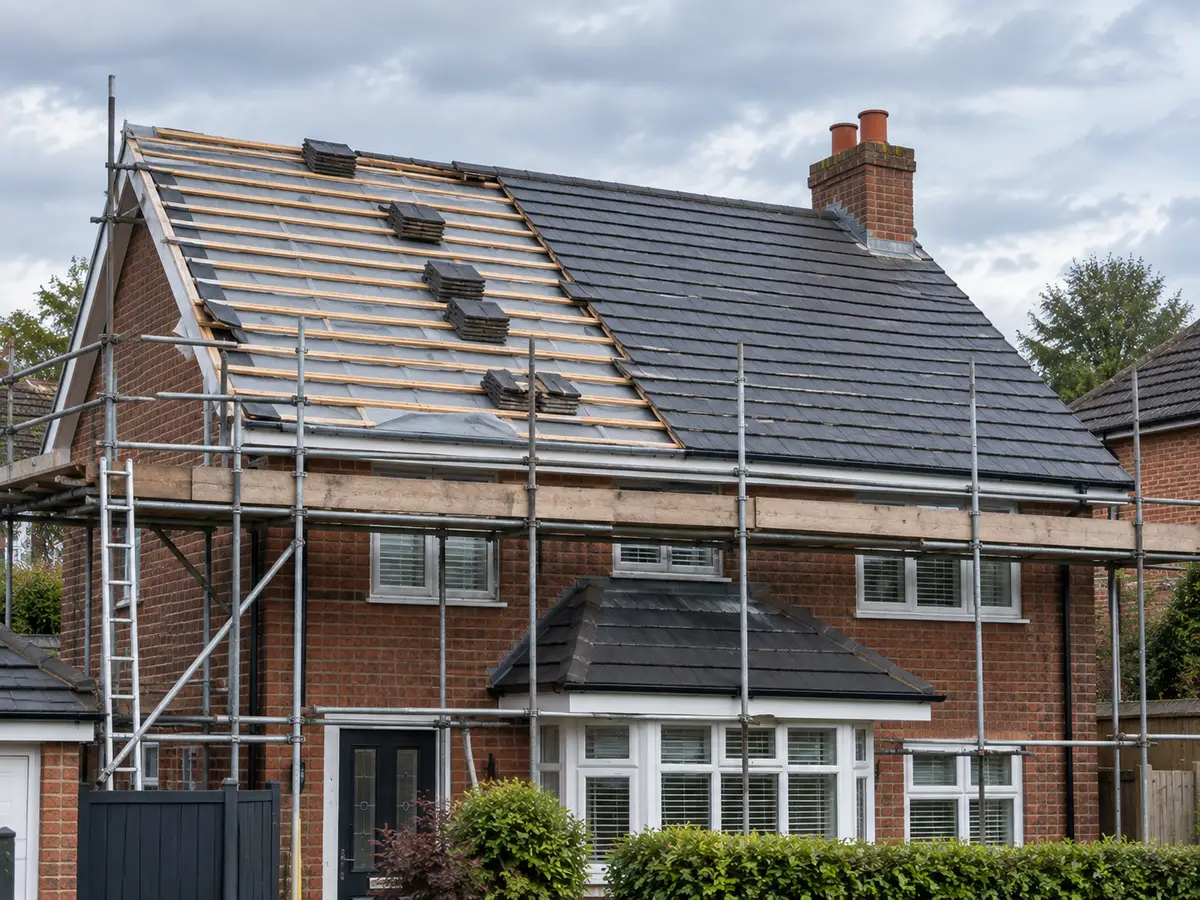
| {{service:new-roof|New roof / replacement}} | The property's approximate age, and how many repairs it's needed recently, if any |
| {{service:guttering|Guttering}} | Which side(s) of the property are affected, and whether it's overflow, damage, or a blockage |
What you don't need to worry about getting wrong
It's easy to feel like you need technical knowledge to describe a roofing problem properly. You don't. You're not expected to know the correct name for a roof valley, identify a specific tile profile, or diagnose the cause yourself — that's the roofing professional's job, not yours. Describing what you can actually observe, in your own words, is exactly what's useful. If you get a detail wrong — you guess it's felt when it's actually GRP, for instance — that's completely fine and gets corrected once someone actually looks at it.
It's also fine to say "I'm not sure" for anything you genuinely don't know — the property's exact age, what material the roof is, how long a problem has really been developing before you noticed it. Guessing confidently at something you're unsure about is actually less helpful than simply flagging the uncertainty, since a roofer can work around "I don't know" far more easily than around information that turns out to be wrong.
Language barriers or simply not feeling confident writing in detail shouldn't put anyone off either — short, plain sentences describing what you've seen work just as well as more polished prose. What matters is the underlying information, not how it's phrased.
A couple of common mistakes worth avoiding
- Being too brief out of a wish not to "waste anyone's time" — a two-word description ("roof leak") genuinely takes longer to act on than a proper one, since it usually just prompts clarifying questions.
- Self-diagnosing with too much confidence — stating a specific cause as fact when it's really a guess can occasionally send a roofer's initial thinking in the wrong direction. It's better to describe the symptom ("damp patch, no obvious cause") than assert a diagnosis you're not certain of.
- Leaving out the postcode or access details because they feel like administrative rather than useful information — they directly affect what equipment and approach a job needs, which affects both timing and cost.
- Forgetting to mention if the situation has changed since you first noticed it — whether it's stable, worsening, or improved is genuinely useful context, not just the current snapshot.
- Waiting to submit an enquiry until you've "figured it out properly" — you don't need a complete diagnosis before reaching out; a clear description of symptoms is exactly the starting point that's useful.
A simple template you can adapt
If a blank text box feels harder to fill in than it should, here's a simple structure to work from — fill in your own details in place of the brackets.
You don't need to follow this word for word — it's simply a scaffold for making sure you've covered the details that matter most, in roughly the order that's most useful to read. If you'd rather not fill in the brackets yourself, our free description builder walks through the same questions and writes it for you.
What happens once you've submitted this information
Once your enquiry includes clear details, it's reviewed and may be shared with independent roofing professionals covering your area. A well-described enquiry is generally easier to match appropriately — for instance, a roofer who regularly handles chimney work is a more relevant match for a chimney-specific problem than a general callout, which is easier to identify when the enquiry itself is specific rather than vague.
From there, any contact you receive would come directly from the roofing professional, typically to arrange a visit, ask any clarifying questions your enquiry didn't cover, or in some cases provide an initial indication based on what you've described — though a firm quote generally still requires an in-person look, as covered in our cost guide.
It's worth knowing that RoofEnquiry itself doesn't employ roofers or carry out any repair work directly — the platform's role is passing your enquiry, as you've described it, on to independent roofing professionals covering your area. Which is exactly why the quality of that description matters as much as it does throughout this guide.
Putting it together
None of this needs to be a formal report — a few clear sentences covering the problem, when it started, roughly where, plus a couple of photos, covers most of what's genuinely useful. If you're dealing with an active leak specifically, our leak guide covers both the immediate safety steps and the details worth noting down as it happens.
The practical benefit of getting this right upfront is that it reduces back-and-forth later. A clear, detailed enquiry means less time spent on clarifying questions before anyone can give you a meaningful response, and a first quote (once someone has actually assessed the property) that's more likely to be close to the final figure, since there's less left to discover on the day.
Frequently Asked Questions
Do I need professional photos, or are phone photos fine?+
Ordinary phone photos are fine. Clear and reasonably well-lit is more useful than high production value — a quick, clear shot beats a carefully composed but blurry one.
What if I don't know what type of roof I have?+
That's completely normal, especially if you've recently moved in. A general description and photos are usually enough for a roofing professional to identify the material themselves.
Should I mention if I've already had someone else look at it?+
Yes — if a previous assessment or repair is relevant to the current problem, mentioning it (including roughly when and what was done) gives useful context.
Is it okay to say I'm not sure how urgent it is?+
Yes — being honest about uncertainty is more useful than guessing. Describing the actual situation (e.g. no active leak, but a tile fell off) lets a roofing professional judge urgency themselves.
How much detail is too much detail?+
In practice this is rarely a problem — most enquiries err on the side of too little detail rather than too much. A few clear sentences plus photos is the sweet spot; a lengthy essay isn't necessary, but it's better to over-explain than leave out something relevant.
Should I mention my budget upfront?+
It's optional. Some people prefer to get an independent assessment first and discuss budget once they understand the scope of work; others find it useful to mention a rough ceiling upfront. Either approach is reasonable.
What if my problem doesn't fit neatly into one category?+
That's fine — describe what you're actually experiencing in your own words rather than trying to force it into a specific category. A roofing professional can work out the right classification once they understand the actual problem.
Do I need to know the roof's pitch or dimensions?+
No — this is something a roofing professional would typically assess themselves, either from photos or an in-person visit. It's not expected information from a homeowner.
What if my situation has changed since I first noticed the problem?+
Mention that explicitly — 'it's been getting worse since I first noticed it' or 'it seems to have stopped now' is genuinely useful context, not just the current snapshot on its own.
Is it better to call or submit details in writing?+
Written descriptions (via an enquiry form, for example) have the advantage of letting you think through the details and attach photos, and give the roofer something concrete to refer back to. Either approach can work, but writing it down tends to produce more complete, considered information.