What To Do If Your Roof Is Leaking
By RoofEnquiry Editorial · Updated 20 January 2026 · 10 min read
Quick answer
- Protect people and electrics first, then contain the water — a bucket and moved furniture buy you time.
- Don't go into the loft or onto the roof yourself to investigate, especially in wet or windy conditions.
- Photograph the damage and note when it started — this genuinely speeds up diagnosis later.
- A leak rarely gets better on its own; the longer it's left, the more it tends to cost to put right.
In the first few minutes: safety first
A leak is stressful, but the first few minutes matter more for safety than for the roof itself. Water and electrics don't mix, so before anything else, look at where the water is actually coming through.
First response by situation
| Situation | What to do |
|---|---|
| Water near a light fitting, socket or consumer unit | Treat as a priority. If you can safely reach your consumer unit, consider switching off the affected circuit. If in doubt, treat the area as off-limits and contact an electrician. |
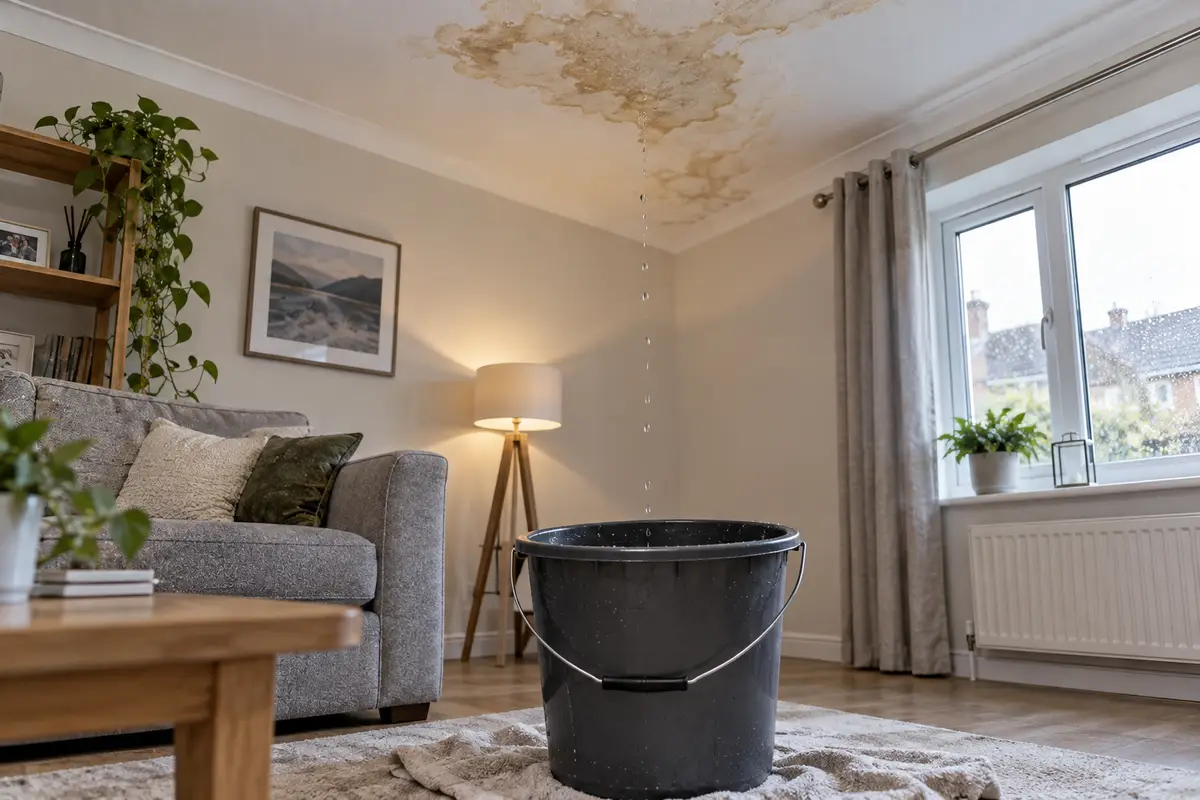
| Water dripping steadily from the ceiling | Move anything valuable or electrical out of the way, then place a bucket or container directly underneath. |
| A bulging or sagging patch of ceiling | Don't stand directly underneath it — a saturated ceiling can fail suddenly. Move furniture and people out of that immediate area. |
| Water tracking down an internal wall | Move anything against that wall, particularly electrical items, and keep an eye on nearby sockets. |
Containing the water
- Place a bucket, washing-up bowl or similar directly under the drip — a folded towel in the bottom reduces splashing noise and mess.
- If the ceiling is bulging with trapped water, some people carefully pierce a small hole at the lowest point to let it drain in a controlled way into a bucket, rather than risk a larger uncontrolled collapse. This is a judgement call — if you're not confident doing this safely, it's fine to simply monitor the area instead.
- Move furniture, rugs, electronics and anything irreplaceable away from the affected area.
- If water is pooling on the floor, towels or old sheets can limit it spreading while you sort out containers.
- Keep a rough note of how much water is collecting and how quickly — it's a useful detail for whoever ends up diagnosing the cause.
What not to do
- Don't climb into the loft to look for the source unless you're confident about safe movement across joists — it's easy to put a foot through a ceiling, and lofts can be poorly lit and cluttered.
- Don't go onto the roof yourself, especially in the rain or wind that's likely causing the leak in the first place. Roof surfaces are more slippery than they look, and this is genuinely one of the more common causes of serious injury around the home.
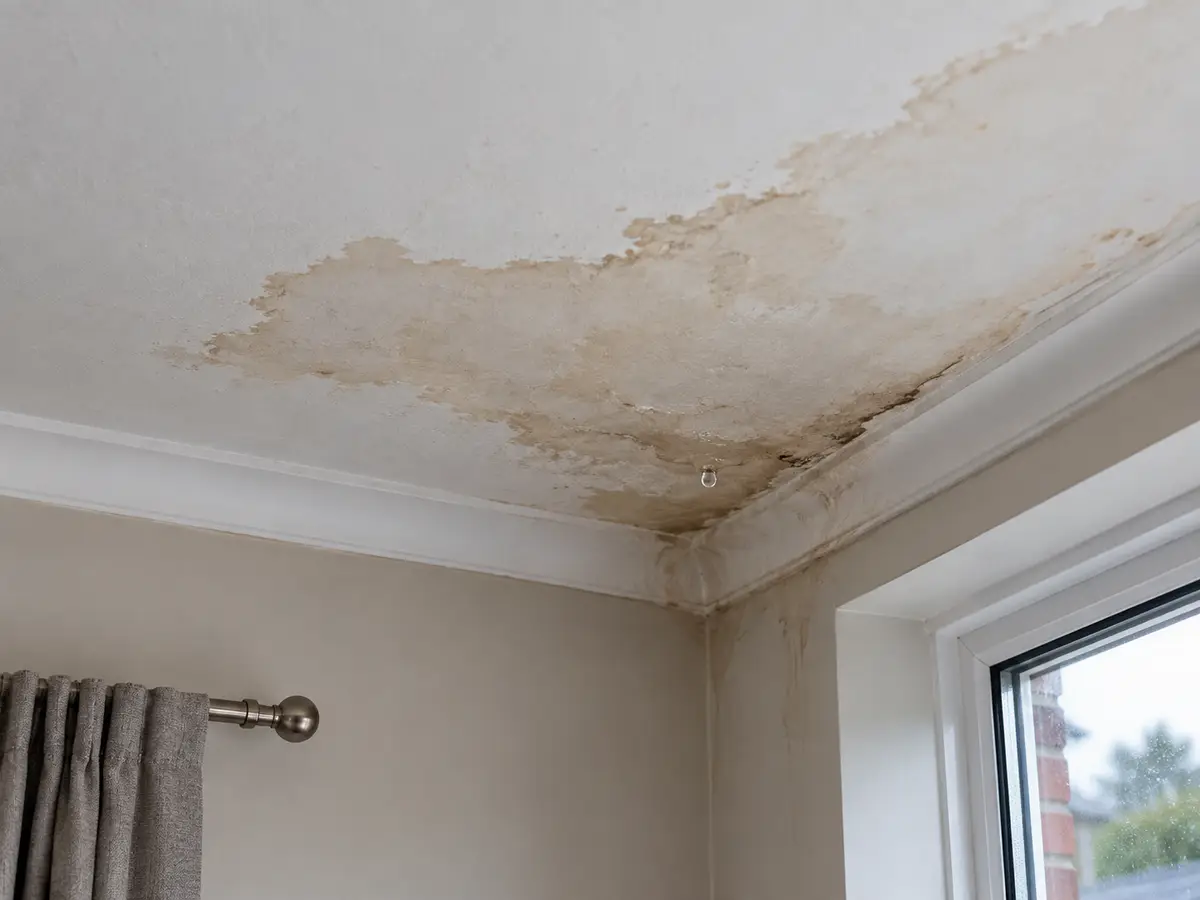
- Don't ignore a leak because it's "only a bit of water" — even a slow, small drip can quietly soak insulation and timber for weeks before it becomes visible as a ceiling stain, by which point the damage is often more extensive than the leak itself suggested.
- Don't assume it will dry out and be fine — unlike some household damp issues, an active roof leak has an ongoing source, so it keeps recurring until that source is actually fixed.
What tends to cause roof leaks
You don't need to diagnose the exact cause yourself, but knowing the common culprits helps make sense of what a roofer tells you later.
| Common cause | Typical sign |
|---|---|
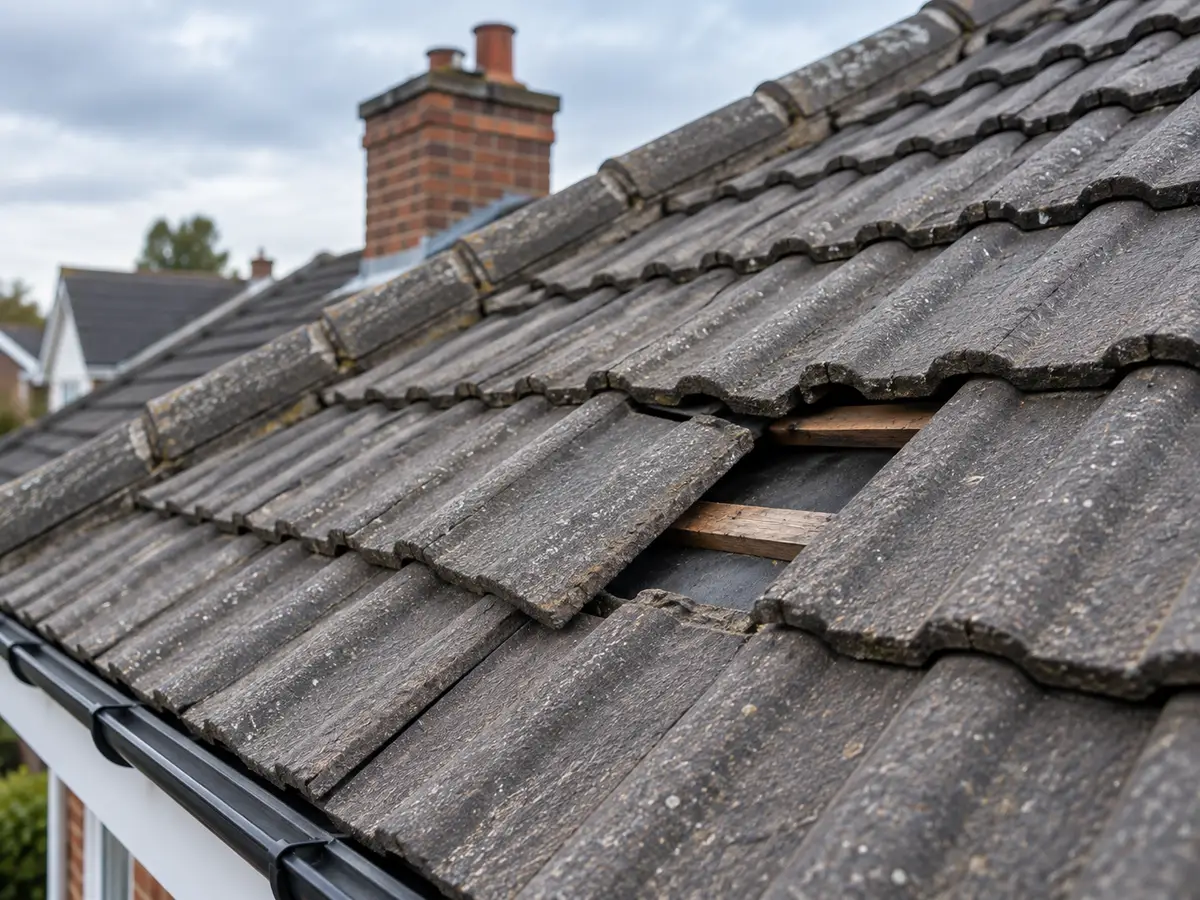
| Slipped, cracked or missing tiles/slates | Leak appears during or shortly after rain, often near an edge or valley |
| Failed flashing around a chimney or roof junction | Leak concentrated near a chimney breast or where two roof sections meet |
| Blocked or overflowing guttering | Water tracking down an external wall, sometimes appearing as damp low on an internal wall |
| Damaged flat roof membrane | Leak below a flat-roofed extension, garage or dormer, often after standing water |
| Condensation in a poorly ventilated loft | Damp appearing without an obvious link to rainfall, sometimes with a musty smell |
If your leak followed a specific storm or period of high wind, it's also worth reading the signs a roof may need repair, since storm-related leaks often come with other visible damage.
One detail that often confuses people is that where the water appears inside the house isn't always directly below where it's entering the roof. Water can run several feet along the top of a felt underlay, or along a timber rafter, before finding a gap in the ceiling boards below and dripping through. This is exactly why good information — when it started, whether it's linked to rain, how it's changed over time — matters more for a leak than for almost any other roofing problem: it helps a professional narrow down the search before they've even climbed a ladder.
It's also worth knowing that more than one of these causes can be present at once, particularly on an older roof — a blocked gutter that's been overflowing for a while can, over time, contribute to fascia and felt damage nearby, which then becomes its own separate entry point. This is one more reason a proper diagnosis by someone who can actually access the roof matters more than guessing from a single visible symptom.
It's genuinely common for a homeowner's first guess about the cause to turn out to be wrong, or only partially right, once someone has actually been up on the roof — not because the homeowner did anything wrong, but because the visible symptom and the actual entry point simply aren't always in the same place. If your own guess turns out to be off the mark, that's a completely normal part of the process, not a sign you described things badly.
Ultimately, none of this needs to be solved by you — your job is simply to describe what's happening as clearly as you can and get it in front of someone who can actually investigate it properly.
If you're renting
If you're a tenant rather than the property owner, the roof itself is generally the landlord's responsibility to repair, though the exact position depends on your tenancy agreement. What's usually still worth doing yourself, regardless of whose responsibility the repair is, is the immediate safety and containment steps above — protecting yourself, your belongings and the property from further damage — while separately notifying your landlord or letting agent as soon as reasonably possible.
- Report the leak to your landlord or agent promptly, ideally in writing (text or email) so there's a clear record of when you reported it.
- Take the same photos and notes described in this guide — they're useful for you too, not just for whoever arranges the repair.
- Ask about the expected timescale for repair, particularly if the leak is affecting a room you rely on.
- If you're a landlord or managing a rented property yourself, the same safety and containment advice applies before arranging a repair — and submitting an enquiry is a straightforward way to get the process moving.
Documenting it properly, in case you need to claim
Whether or not you end up making an insurance claim, it costs nothing to document a leak properly while it's happening, and it's much harder to do convincingly after the fact. A few extra minutes here can make a real difference if a claim does end up being relevant.
- Photograph the damage from multiple angles, including a wide shot for context and close-ups of the worst-affected areas.
- Note the date and approximate time you first noticed it.
- If it coincided with a specific storm or weather event, note that explicitly — storm damage and gradual wear are often treated very differently by insurers.
- Keep any receipts for emergency measures you take yourself, such as a tarpaulin or a plumber's temporary fix, as these are sometimes claimable.
- Avoid throwing away damaged items (carpet, furniture) until you've checked whether your insurer wants to see them or have photos logged first.
The first 24 hours
- Keep emptying and repositioning your containment as needed, particularly overnight if the rain continues.
- Take photos of the affected ceiling, wall or floor, including a wide shot showing the room and a close-up of the damage.
- Note down when you first noticed it, whether it coincided with rain or wind, and whether it's getting worse.
- If it's safe and dry enough, a quick look from ground level outside — without a ladder — for obviously missing or displaced tiles can add useful context, though it's not essential.
- Check your home insurance policy for what's covered and any claim time limits, particularly if the cause looks storm-related.
Getting it looked at
Once things are contained and safe, the next step is getting a roofing professional to actually diagnose the source — something that's genuinely difficult to do accurately from inside the house, since water can travel along timber or felt before it drips through in a particular spot, meaning the leak often isn't directly above where the damp appears.
The details you gathered in the first 24 hours — when it started, whether it's linked to rain, and photos of the damage — are exactly what a roofer finds useful when assessing a leak, even before they've been to the property.
Temporary fixes vs a permanent repair
In genuine emergencies, a roofing professional may apply a temporary measure — a tarpaulin sheet secured over the affected area, or a quick seal on an obviously damaged spot — to stop water getting in immediately, with a permanent repair following once materials or access can be properly arranged. This is a normal, sensible approach for urgent situations, particularly outside daylight hours or during severe weather when a full repair isn't safely possible straight away.
If you've been offered a temporary fix, it's worth asking clearly when the permanent repair is expected, and making sure that's actually booked in rather than left open-ended — a tarpaulin is a genuinely useful short-term measure, but it isn't designed to be a long-term solution, and it's worth confirming what happens next rather than assuming it will be followed up automatically.
After the repair
Once the source is fixed, it's worth keeping an eye on the affected ceiling or wall for a couple of weeks — residual dampness in timber or plaster can take a while to fully dry out, and a persistent damp patch that isn't shrinking is worth mentioning to whoever carried out the repair. Depending on the extent of the water ingress, you may also need separate work to make good the ceiling or redecorate, which is typically a different job to the roof repair itself.
It's also reasonable to ask whatever caused the leak to be explained to you in plain terms — not because you need to become an expert, but because understanding whether it was, say, a one-off slipped tile versus a sign of wider ageing helps you judge whether it's worth a wider roof inspection while you're at it.
Reducing the chance of it happening again
- Keep gutters clear — a blocked gutter is one of the more common indirect causes of water finding its way where it shouldn't, particularly around eaves and lower roof edges.
- Don't ignore small early signs — a single slipped tile spotted early is a much smaller job than the leak it eventually causes if left.
- If the cause was condensation rather than rain, ask specifically about loft ventilation — improving airflow can prevent a repeat issue that a simple patch repair won't fix on its own.
- Keep the photos and notes from this leak — if anything similar happens again, having a record of what was done and when is genuinely useful.
Our roof inspection checklist is a good next step once things have settled — a simple routine that helps catch the next issue earlier, rather than at the point it's already dripping through a ceiling.
Frequently Asked Questions
Is it safe to go into the loft during a leak?+
Only if you can move confidently and safely across the joists, ideally with a torch and without stepping directly on insulation, which can hide gaps between joists. If in doubt, it's safer to wait for a professional rather than risk putting a foot through a ceiling.
How quickly does a roof leak need to be fixed?+
There's no fixed rule, but leaks generally get worse the longer they're left, as water can affect timber, insulation and plasterboard over time. If the leak is active and you selected 'Emergency / ASAP' on an enquiry, it signals to any roofing professional reviewing it that the situation is urgent.
Will a small ceiling stain go away by itself once the leak is fixed?+
The stain itself usually needs separate redecoration once everything has fully dried out — fixing the leak stops new water coming in, but doesn't undo existing staining.
Can I claim on insurance for a roof leak?+
It depends on the cause and your specific policy — sudden, identifiable events like storm damage are more commonly covered than gradual wear. Contact your insurer directly, as RoofEnquiry can't advise on individual policies.
My landlord is slow to respond — what can I do?+
Keep a written record of when you reported the issue and any follow-ups. Beyond that, tenants' rights and next steps vary by tenancy type and location, so this is worth checking with a tenancy advice service rather than relying on general guidance here.
Can a leak cause an electrical hazard even if it's not near a socket?+
Water can travel further than it appears to, including inside walls and ceiling voids. If you have any doubt about proximity to wiring, it's safest to treat the area as a priority and, where necessary, involve an electrician rather than assume it's fine.
How long can a temporary tarpaulin fix safely last?+
It varies by situation, but a tarpaulin is generally intended as a short-term measure rather than a long-term solution. If a permanent repair is being delayed for more than a week or two, it's worth checking in on the timeline.
Why does my leak seem worse on windy days even without much rain?+
Wind can drive rain into gaps at an angle that wouldn't otherwise let water through in calmer conditions, and can also worsen an existing small gap in flashing or a tile. This detail — that it's worse specifically when windy — is worth mentioning when describing the problem.
Could a leak actually be coming from plumbing rather than the roof?+
It's possible, particularly in a property with a bathroom or water tank in or near the loft space. If the timing doesn't match rainfall at all, it's worth mentioning that explicitly, since it may point towards a plumbing issue rather than the roof itself.
Should I take photos even at night if I discover a leak then?+
A quick photo is still useful even in poor light — a phone flash or room lighting is enough to show the general extent of the problem. You can always take clearer daylight photos the next morning as a follow-up.
What if the leak stops before anyone can look at it?+
Still worth reporting and getting assessed — an intermittent leak, particularly one linked to specific weather conditions, often has an ongoing underlying cause even during dry spells, and tends to return.
Can I use household sealant to temporarily patch a visible gap myself?+
This is generally best left to a professional, even for a temporary measure — incorrect sealant use can sometimes trap moisture in the wrong place or make a proper repair more difficult later. If it's safe and easy to do without accessing the roof, ask a professional first.