Birds, Squirrels and Wildlife on Your Roof: Common Problems and What to Do
By RoofEnquiry Editorial · Updated 24 September 2026 · 11 min read
Quick answer
- Birds, squirrels and occasionally bats can all find their way into gaps around a roofline, and the damage they cause is often mistaken for ordinary wear and tear.
- Nesting wild birds and bat roosts are both legally protected in the UK — you can't legally disturb or remove an active nest or roost, even from your own property, without following the correct process.
- Most wildlife problems are really an access problem — a gap under a tile, a damaged soffit, an unguarded gutter — that's worth closing properly once the current occupants have moved on.
- Prevention (mesh, guards, trimmed branches) is far simpler and cheaper than dealing with an established nest, a chewed loft, or the mess left behind afterwards.
A roof problem that has nothing to do with weather or age
Most of the problems covered elsewhere on this site trace back to weather, age, or materials wearing out over time. Wildlife is a different category entirely — a roof can be in genuinely good condition and still develop a real problem simply because something found a gap and decided it was a good place to live. It's a more common cause of roof issues than people expect, and one that's easy to misdiagnose as ordinary damage if you don't know what to look for.
It's also a topic where getting the response right matters more than usual, because — unlike a slipped tile or a blocked gutter — some of what ends up living in or on a roof is legally protected, and dealing with it the wrong way isn't just ineffective, it can be against the law.
What typically moves in
Common roof wildlife in the UK
| Visitor | Where it typically goes | Main issue it causes |
|---|---|---|
| Birds (pigeons, sparrows, starlings) | Under raised tiles, in gutters, on ledges and chimney tops | Nesting material blocking valleys and gutters; droppings causing mess and, over time, damage to surfaces |
| Squirrels | Gaps at the eaves or soffit, sometimes gnawing their way into a loft space | Chewed fascias, soffits and timber; disturbed insulation; occasional damage to wiring or pipework once inside |
| Bats | Small gaps under ridge tiles, hanging tiles, or behind soffits — often unnoticed for years | Rarely causes structural damage, but is the most legally sensitive category by a significant margin |
| Wasps and bees | Cavities in soffits, under eaves, or in chimney stacks no longer in use | Not a roof-damage risk as such, but a genuine safety concern near an occupied property |
More than one of these can be present at once — a roof with an existing gap or damaged soffit is simply an easier target for whichever of these finds it first.
There's a strong seasonal pattern to most of this. Birds are most active around a roof during the spring and early summer breeding season, when nest-building and feeding activity peaks. Squirrels tend to seek out loft access in autumn, as they look for a warm, dry place ahead of winter, and again in early spring when young are born. Wasps typically establish a new nest each year from scratch, usually becoming noticeable from mid-summer onwards as the colony grows. Knowing roughly which season you're in is a genuinely useful first clue to what's likely to be involved before anyone's even had a proper look.
Signs you've got a wildlife problem, not just a maintenance one
- Scratching, scuffling or movement sounds from the loft or roof space, particularly noticeable early morning or at dusk
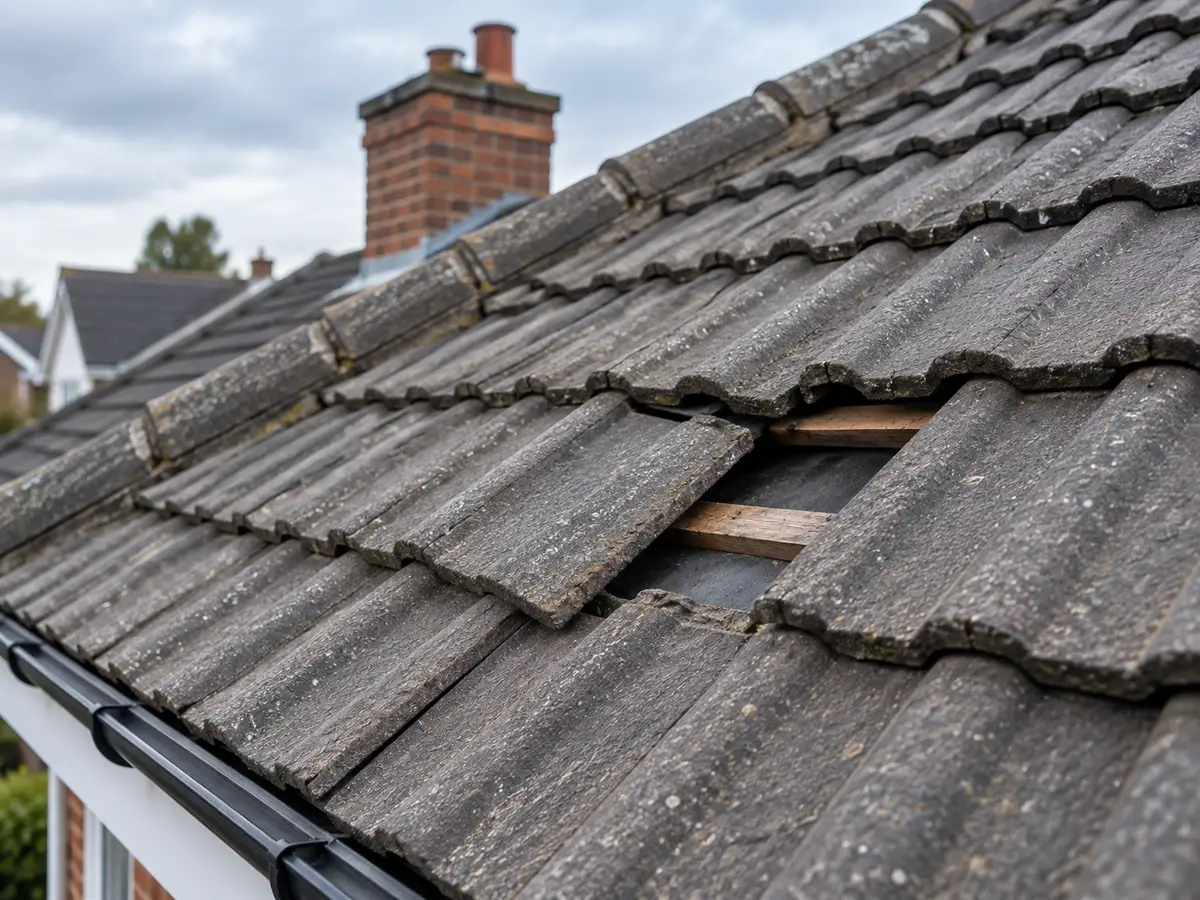
- Nesting material — twigs, moss, leaves — visible in gutters, valleys or under the edge of raised tiles
- A build-up of droppings on the roof, guttering, or ground below a particular spot, especially a chimney or ledge
- Gnawed or chewed timber at the fascia, soffit, or bargeboard, often with visible tooth marks
- A gap or hole that's appeared at the eaves or soffit that wasn't there before, sometimes with debris pushed out around it
- A strong, persistent smell from the loft, which can indicate droppings, an old nest, or occasionally a deceased animal
Several of these overlap with signs covered in our general signs of roof damage guide, which is exactly why wildlife is worth ruling in or out early — a gnawed soffit and a rotten one can look similar from a distance, but need completely different fixes.
Why it's worth taking seriously beyond the noise and mess
- Nesting material in a valley or gutter is a genuinely common cause of the blockages covered in our guttering guide — a single season's nest can be enough to redirect water somewhere it shouldn't go.
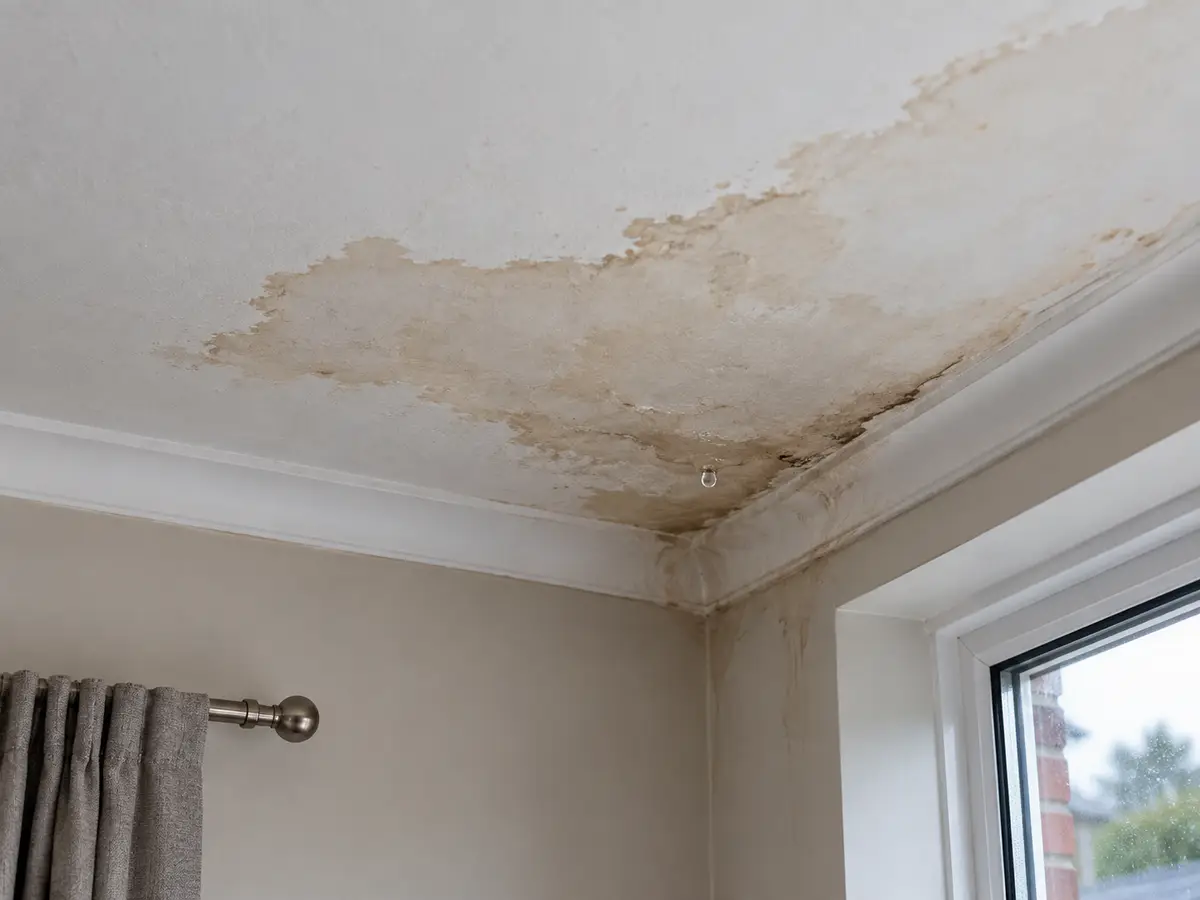
- A gap large enough for a squirrel is large enough for water and draughts too, which can undermine the ventilation balance covered in our loft ventilation guide even once the animal itself is gone.
- Droppings are more than cosmetic — bird and rodent droppings are corrosive to some roofing and guttering materials over time, and can carry health risks that make them worth clearing properly rather than simply hosing off.
- Chewed timber at the fascia or soffit weakens exactly the structure that guttering and roof edges rely on, compounding into the problems covered in our guttering guide if left unaddressed.
- An active entry point rarely stays used by just one generation — once a gap is established as a route in, it tends to keep being used year after year until it's actually closed.
The legal side: what you can and can't do
This is the part of the page that matters most, and it's worth reading properly before doing anything about wildlife on your roof.
In practice, this means the timing and method of any work matters as much as the work itself. An empty, inactive nest outside the breeding season is generally fine to remove as part of routine roof or guttering maintenance. An active nest with eggs or chicks, found during a repair, usually means waiting until the birds have naturally finished using it before continuing that specific part of the work. If there's any possibility of bats — droppings that look different from bird or rodent droppings, or gaps in a roof type known to suit roosting — it's worth having this checked by someone experienced before any work goes ahead in that area, since the protections apply whether or not bats turn out to actually be present.
None of this is meant to discourage dealing with a genuine problem — it's simply why a professional's judgement matters here more than with most other roof issues, and why "just clear it out" isn't always the safe or legal first step it might seem to be.
Bats specifically: why they get a section of their own
Bats deserve particular attention because the usual visual cues that help with birds or squirrels often don't apply — a roost can go completely unnoticed for years, since bats are small, quiet, nocturnal, and typically use gaps far smaller than most people would expect an animal to fit through. A gap under a single ridge tile or behind a section of soffit is genuinely enough.
All UK bat species and their roosts are protected under wildlife legislation, and that protection applies to the roost itself — not just to bats that happen to be present at the time. This means a roost can be legally protected even during months when it's not actively being used, which is a detail that catches a lot of homeowners and even some contractors by surprise. If there's a reasonable possibility of bats — droppings that look finer and more crumbly than typical mouse droppings, small dark staining around a gap, or simply a roof of a type and age known to suit roosting — a proper check by someone qualified before starting nearby work is the safe route, rather than assuming absence because none have been seen.
Repairing the damage once wildlife has moved on
Once an entry point is confirmed clear and any legal timing considerations have been respected, the repair side of wildlife damage is generally straightforward roofing and guttering work, just with a couple of extra steps folded in.
- Chewed or damaged fascia and soffit boards typically need replacing rather than repairing, since gnaw damage tends to weaken timber beyond a simple patch — the same general repair covered in our guttering and fascias guide.
- Old nesting material sitting in a valley or gutter needs clearing before that part of the roof can drain properly again, and is worth checking for thoroughly rather than assuming a visible clump is all of it.
- Insulation disturbed or soiled by animal activity in the loft may need topping up or replacing in the affected area, since compressed or contaminated insulation doesn't perform as well as intact material.
- Droppings and old nesting debris are best cleared with appropriate protective equipment rather than handled casually, given the health considerations mentioned above — this is a detail worth raising with whoever carries out the work.
- Once the immediate repair is done, the prevention measures below are what actually stop the same spot being used again the following year.
What to do if you find wildlife on or in your roof
- Don't attempt to remove an active nest, disturb a suspected bat roost, or seal an entry point that's currently being used — establish what's actually there first.
- Note where the activity is, roughly what you're seeing or hearing, and when you first noticed it — the same kind of detail that helps with any roofing enquiry.
- For squirrels or other mammals that have gained access to the loft itself, a pest control professional is usually the right first call, since removal and exclusion (safely sealing the entry point afterwards) is a specific skill.
- For roof and guttering damage caused by wildlife — chewed fascias, blocked valleys, dislodged tiles — that's exactly the kind of repair work a roofing professional would typically handle, once any current occupants have safely moved on.
- If in doubt about whether something might be a protected species, it's better to pause and ask than to assume and act — this is one area where caution genuinely is the cheaper option in the long run.
Prevention: closing the gap before something moves in
- Bird and vermin-proof mesh or comb filler strips at the eaves close off the gap between the roof covering and the fascia — the single most common entry point — without affecting normal ventilation.
- Chimney cowls or balloons prevent birds from nesting in a disused flue, a surprisingly common and easily preventable issue on chimneys no longer in active use.
- Trimming back branches that overhang or touch the roof removes an easy access route for squirrels, who rarely need to climb the building itself if a branch gets them onto the roof directly.
- Keeping gutters and valleys clear (see our guttering guide) makes a roof a noticeably less attractive nesting spot, since birds favour areas with existing debris to build on.
- A routine check — our inspection checklist and the interactive version of it both include a check for gaps and signs of animal activity — catches a new access point early, before it's had a season to become established.
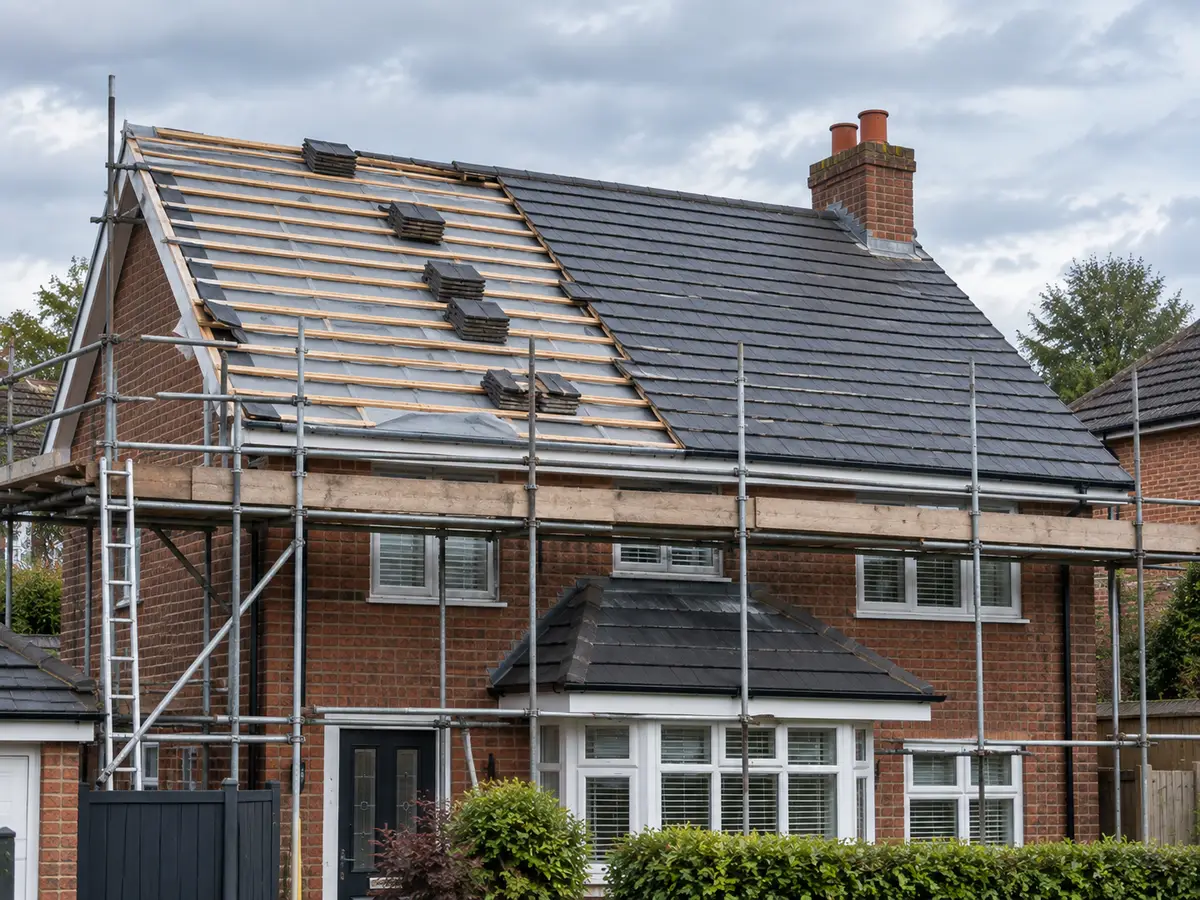
It's worth combining prevention work with anything else already planned for the roof rather than treating it as its own separate visit. If access equipment is already being used for a guttering job, a re-roof, or a general inspection, that's usually the most cost-effective moment to have eaves mesh or a chimney cowl fitted at the same time, rather than paying for separate access later for what's often a relatively quick addition to a job already under way.
Getting it looked at
Whether you're dealing with noise in the loft, visible nesting material, chewed timber, or simply want gaps checked and closed before anything moves in, the details that help most are what you've noticed, roughly where on the property, and any photos you can safely take from ground level. Our guide on what information to give a roofer covers this in more general detail, and it's worth mentioning wildlife specifically so it's factored into how the work is planned.
Frequently Asked Questions
Is it illegal to remove a bird's nest from my roof?+
While it's actively in use — meaning eggs or chicks are present, or birds are still building or occupying it — yes, it's an offence to intentionally damage or remove it. An old, inactive nest outside the breeding season is generally fine to clear as part of routine maintenance.
What should I do if I think I have bats in my roof?+
Avoid disturbing the area and have it checked by someone experienced with bat surveys before any roof work goes ahead nearby. Bats and their roosts are strongly protected under UK law, and this applies regardless of whether bats are present at the exact time you check.
Can squirrels really cause serious damage to a roof?+
Yes — squirrels can gnaw through fascias and soffits to gain entry, and once inside a loft can disturb insulation and occasionally damage wiring or pipework. Closing the entry point after they've been safely excluded is the key step in stopping it recurring.
How do I know if it's squirrels, birds, or something else in my loft?+
Timing and sound are useful clues — birds are typically most active at dawn, while squirrels can be heard at various times including daytime. A pest control professional can usually confirm which species is present from droppings, entry points and behaviour patterns.
Are bird droppings on a roof actually harmful?+
They can be corrosive to some roofing and guttering materials with prolonged build-up, and large accumulations can carry health risks, so persistent, heavy droppings are worth having cleared properly rather than left indefinitely.
Will bird-proofing mesh stop birds nesting under my tiles?+
Generally yes — mesh or comb filler strips fitted along the eaves close off the main gap birds use to get under the tile line, while still allowing normal airflow through to the loft.
What's the best time of year to have wildlife-proofing work done?+
Outside the main bird breeding season, broadly spring through late summer in the UK, so there's no risk of sealing an active nest inside. Fully vacant entry points can generally be closed at other times of year.
Can wasps or bees nesting in a roof cause structural damage?+
Not typically to the roof structure itself, but a nest near an occupied part of the property is a genuine safety concern and usually best dealt with by a pest control professional rather than left in place.