Roofing Materials Compared: Slate, Tile, Metal and Flat Roof Coverings
By RoofEnquiry Editorial · Updated 24 September 2026 · 10 min read
Quick answer
- Material choice affects far more than appearance — weight, planning rules, and how a covering ages in UK weather all narrow down what actually suits a given property.
- Natural slate and clay tile last the longest by a significant margin, but aren't automatically the right choice for every roof structure, particularly older ones not built to carry that weight.
- Concrete tile is the most common modern UK covering for good reason — a wide range of profiles and colours at a lower cost than natural materials, with a genuinely long working life.
- Flat roof coverings (felt, GRP, EPDM) are a separate category entirely, with their own lifespan and maintenance profile, covered in more depth in our flat roof guide.
Why the material matters beyond how it looks
Choosing a roofing material tends to get framed as an aesthetic decision — which one looks right on the property — and appearance is genuinely part of it. But the material also determines how much weight the roof structure needs to carry, how long it's realistically going to last, what maintenance it needs along the way, and in some cases whether you're even free to choose at all, since conservation areas and listed buildings frequently require matching what's already there rather than picking freely.
This page brings together the main options available on UK roofs, pulling from the same lifespan figures used in our roof lifespan guide and the interactive lifespan estimator, so the numbers here are consistent with what you'll see elsewhere on the site rather than a separate set of figures.
There's also a strong regional pattern to what's already on most UK roofs, which is worth knowing before assuming any material is a genuinely free choice. Traditional slate-producing areas — parts of Wales, Cumbria and Scotland in particular — have a long history of local slate roofing, while clay tile is more associated with the brick-and-tile building tradition of southern and eastern England. Concrete tile, by contrast, is the newest of the three at scale and doesn't carry the same regional association, which is part of why it's become the default choice for a huge share of newer housing across the whole country regardless of area.
Lifespan at a glance
Typical UK working lifespan by material
| Material | Typical lifespan | Note |
|---|---|---|
| Natural slate | 80 – 100 years | Often outlasts the battens and fixings beneath it |
| Clay tile | 50 – 60 years | Traditional, especially on older properties — can last considerably longer with maintenance |
| Concrete tile | 40 – 60 years | The most common modern UK tile; colour fading doesn't mean the tile has failed structurally |
| Metal roofing (standing seam) | 40 – 70 years | Less common on standard UK homes, more typical on extensions |
| Natural wood shingles/shakes | 25 – 40 years | Less common in the UK — performance depends heavily on climate and maintenance |
| EPDM rubber (flat roof) | 20 – 30 years | Single-sheet membrane, manufacturer-rated up to 50 years in ideal conditions |
| GRP fibreglass (flat roof) | 20 – 30 years | Seamless rigid surface, generally more durable than felt |
| Felt (flat roof) | 10 – 20 years | Quality varies by number of layers and installation method |
These are general working lifespans under typical UK conditions and maintenance, not guarantees — quality of installation and ongoing maintenance both move the actual figure within (and occasionally beyond) these ranges.
Natural slate
Natural slate is the longest-lasting mainstream roofing material available in the UK by a clear margin, and it's the material most closely associated with period and conservation-area properties, particularly in parts of the country with a history of local slate quarrying. Individual slates can be replaced one at a time when damaged, which makes ongoing maintenance genuinely straightforward compared with materials that need larger sections replaced together.
The trade-off is weight and cost. Slate is heavier than most modern tile options, which matters on an older roof structure that may not have been built with that load specifically in mind — a structural check is a sensible step before committing, particularly on a property that's had previous alterations. It also sits at the higher end of material cost, though its very long working life is part of what offsets that over the decades a roof is in use.
Clay tile
Clay tile is the other traditional mainstay of UK roofing, particularly common across southern and eastern England, and comes in a range of profiles — flat plain tiles, curved pantiles, and various regional variants — each with a distinct look that often ties directly to local building tradition. Like slate, it's a material frequently specified or required in conservation areas where matching the existing character of a street matters.
Clay tile sits between slate and concrete on both cost and lifespan, offering genuinely long service life with a more traditional appearance than concrete, at a lower weight and cost than natural slate. It's a common recommendation where a period look matters but a full slate specification isn't necessary or affordable.
Concrete tile
Concrete tile is the most widely used roofing material on modern UK homes, and it earns that position on a straightforward combination of factors: a genuinely long working life, a wide range of colours and profiles (including options designed to visually resemble slate or clay at a lower cost), and a lower price point than either natural material.
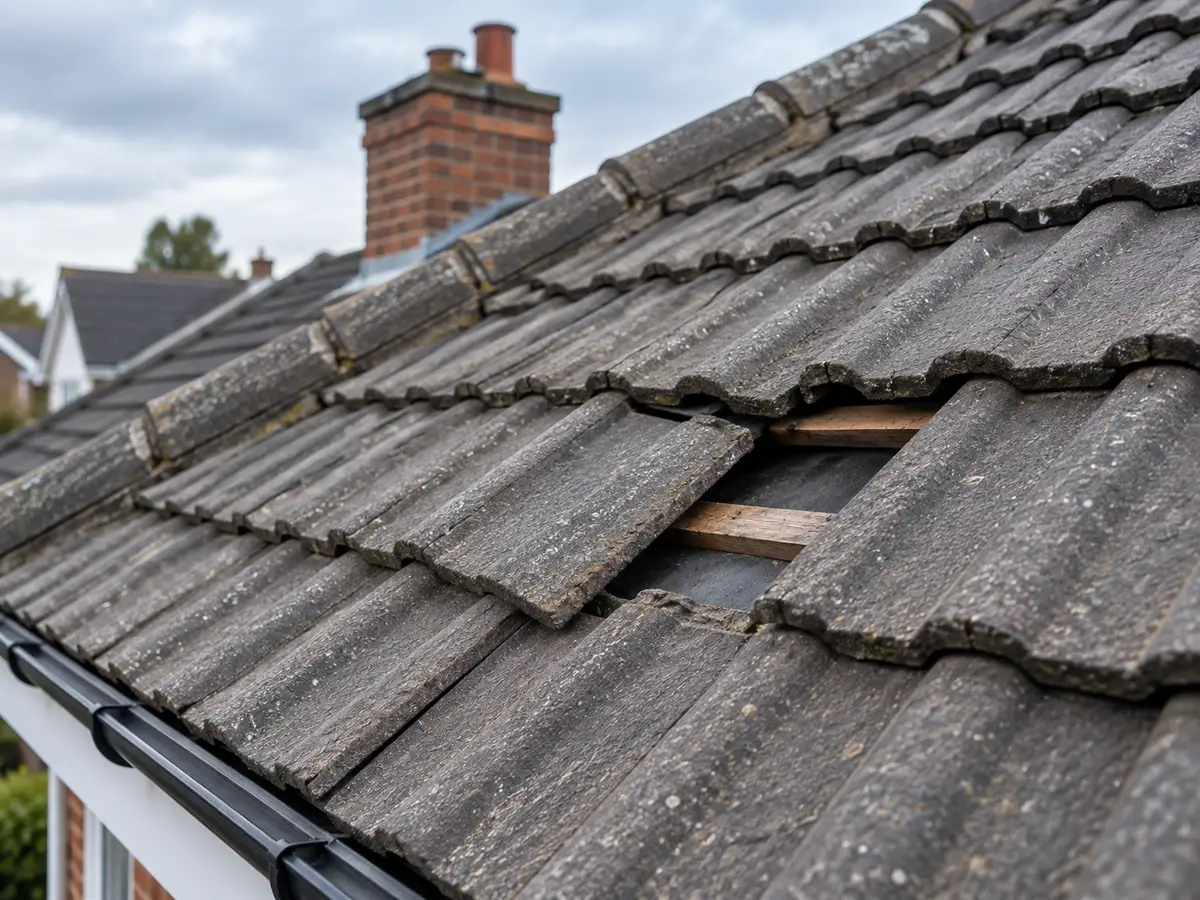
One detail worth knowing specifically about concrete tile: colour fading over time, particularly on darker tiles exposed to UV, is a cosmetic change rather than a sign the tile has structurally failed. It's a common source of homeowner concern that usually doesn't need to translate into replacement — worth mentioning if you're assessing an ageing concrete-tiled roof and the main thing you've noticed is it looking a bit paler or patchier than it used to.
Lightweight and synthetic alternatives
Where a roof structure genuinely can't take the weight of natural slate or standard concrete tile — a common consideration on some older properties, extensions, or outbuildings — synthetic slate and lightweight tile products are designed specifically to replicate the traditional appearance at a fraction of the weight. Quality and expected lifespan vary considerably between products here more than in the natural material categories, so it's worth asking specifically about the manufacturer's rated lifespan and warranty for whichever product is being proposed, rather than assuming all lightweight options perform equally.
Metal roofing — typically standing seam systems — is a less common choice for standard UK domestic roofs but a genuinely strong option where it's used, particularly on extensions, garden rooms, or contemporary-style properties. It offers a long working life and low maintenance, though it's a more specialist installation than tile or slate, and its more modern appearance won't suit every property or planning context.
If weight is even a possible concern — an older property, a previous loft conversion, or a roof structure that's never had a formal structural assessment — it's worth raising this explicitly and early, rather than choosing a material first and discovering a structural problem afterwards. A structural engineer's assessment is a relatively small cost measured against a full re-roof project, and it removes the guesswork from what would otherwise be a fairly consequential assumption.
Matching materials on a partial re-roof or extension
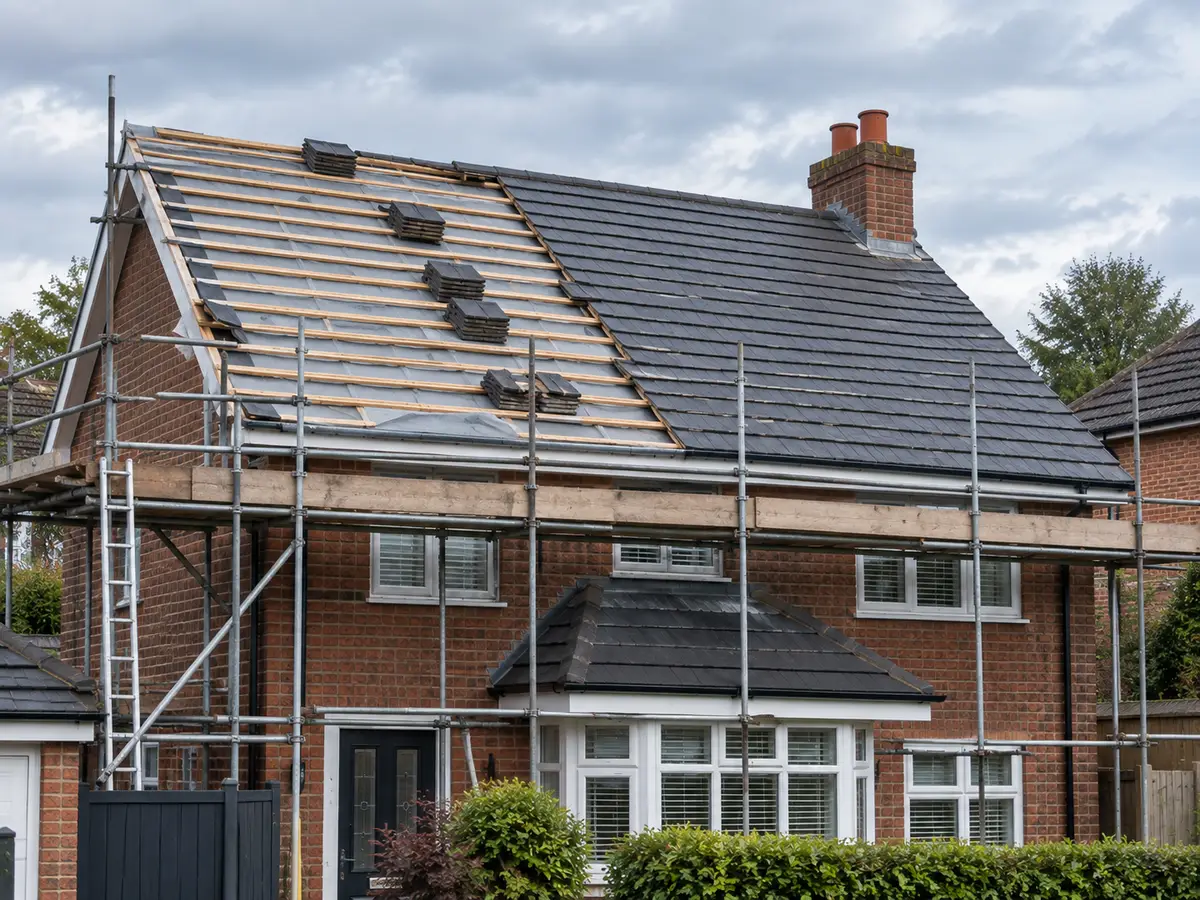
A genuinely common scenario is needing to match an existing material rather than choosing freely — replacing one section of an ageing roof while the rest stays in place, or adding an extension roof that needs to sit visually alongside the original. This is where material choice gets more constrained and more technical at the same time, since an exact match isn't always possible if the original product has been discontinued or weathered to a colour that's simply not reproducible new.
In practice, roofing professionals handle this in one of a few ways: sourcing genuinely matching reclaimed material (common for older clay tile and slate roofs), choosing the closest available modern equivalent and accepting a slight visual difference that will lessen somewhat as the new material weathers in, or — where it's an option — moving reused original material to the most visible slope and using new material on a less prominent one. Worth discussing directly with whoever quotes the job, since the right approach depends heavily on what's actually on your roof already.
Flat roof coverings: a separate category entirely
Flat roofs use fundamentally different materials to a pitched tile or slate roof, since the covering needs to form a continuous waterproof membrane rather than shed water between overlapping units. Felt, GRP fibreglass and EPDM rubber are the three most common options, and they sit noticeably lower on the lifespan table than any pitched roof material — a genuine structural difference in how flat roofs work, not a sign the materials themselves are inferior.
Our dedicated flat roof guide covers these three materials, and the common problems specific to flat roofing, in much more depth — worth reading in full if a flat roof or extension roof is what you're actually specifying, since the considerations there (falls, ponding, membrane seams) differ meaningfully from anything covered in the rest of this page. Broadly speaking, EPDM and GRP tend to be favoured on newer flat roof projects over traditional felt, largely because of the longer working life and, in EPDM's case, fewer seams for water to find a way through — though felt remains a lower-cost option that's still specified regularly, particularly on smaller areas like a garage or bay window roof.
How to actually choose between them
Key factors when comparing materials
| Factor | What to check |
|---|---|
| Structural capacity | Whether the existing roof structure can carry the weight of your preferred material, particularly for slate or natural clay on an older or previously altered roof |
| Planning and conservation rules | Whether the property sits in a conservation area or is listed, which can require matching the existing material rather than free choice |
| Budget, including long-term cost | Upfront price against expected working life — a more expensive material with double the lifespan isn't automatically the costlier option over time |
| Maintenance expectations | Some materials (like slate) allow individual-unit replacement; others involve replacing larger sections together when damage occurs |
| Property style and street context | Whether a material genuinely suits the property's age and the surrounding streetscape, which affects both appearance and, in some cases, resale value |
A roofing professional assessing your specific property is best placed to weigh these together — this table is a starting point for the conversation, not a substitute for it.
If you're weighing up two specific options, our free material comparison tool puts any two materials from this page side by side on lifespan, weight, relative cost and maintenance style, pulled from the same figures used here.
It's also worth being upfront that this decision is one of the bigger ones in a full re-roof project, and rushing it to save a small amount of time rarely pays off given how long the material you choose is going to be on the roof. Our roof replacement guide covers the wider process this decision sits within, including the planning and timeline considerations that go alongside choosing a material.
A useful habit when comparing quotes for the same project: check that each one specifies the exact material, not just a general description like "concrete tile" or "slate." Products within the same broad material category can vary meaningfully in quality, warranty length and price, so two quotes that look similar on the surface can be specifying quite different products underneath. It's a reasonable and normal question to ask directly — exactly which product, by which manufacturer, is included in this price.
A note on longevity and waste
It's worth mentioning briefly, since it's an increasingly common question: a longer-lasting material generally means fewer full re-roofs, and fewer re-roofs over the life of a building means less waste material sent to landfill overall — one of the practical arguments in favour of natural slate and clay tile beyond their appearance, where the structure and budget allow for them. Reclaimed slate and clay tile are also genuinely reused within the industry rather than always being sourced new, particularly for matching work on period properties, which is worth asking about if sustainability is a factor in your decision alongside the structural and planning considerations already covered.
What this means for cost
Our cost guide puts a full re-roof on an average semi-detached property somewhere in the £5,000–£12,000 range, rising to £8,000–£18,000 or more on a larger or more complex property — and material choice is one of the biggest factors that moves a specific quote up or down within, or beyond, that range. Natural slate and clay generally sit towards the higher end given both material and, often, installation cost; concrete tile and lightweight synthetic options generally sit lower. These are general market indicators rather than a quote for your project — our free cost calculator gives an instant indicative range, but an actual figure for a specific material always needs someone to look at your roof.
Getting it looked at
Whether you're planning a full re-roof, replacing part of a roof, or simply want an opinion on whether your current material is the right fit, the details that help most are the property type and age, roughly what's currently on the roof, and anything you already know about planning or conservation status. Our guide on what information to give a roofer covers this in more general detail.
Frequently Asked Questions
What's the best roofing material for a UK home?+
There isn't a single best material for every property — it depends on the existing structure, budget, planning rules, and desired appearance. Concrete tile is the most common modern choice for good all-round value; natural slate and clay tile are common where a traditional or conservation-appropriate look is needed and the structure can support the weight.
Is natural slate always better than concrete tile?+
Not automatically — slate lasts considerably longer and suits period properties, but it's heavier and more expensive. Concrete tile offers a genuinely long working life at lower cost and weight, and is a perfectly sound choice on the large majority of modern UK homes.
Can I choose any roofing material I want?+
Not always — properties in conservation areas or listed buildings often need to match the existing material rather than free choice. It's worth checking with your local authority before finalising a decision if either might apply to your property.
Do lightweight tiles perform as well as traditional slate or clay?+
Quality and lifespan vary considerably between products, so it's worth checking the specific manufacturer's rated lifespan and warranty rather than assuming all lightweight or synthetic options perform equally. They're a genuinely useful option where the existing structure can't take heavier natural materials.
Why does concrete tile fade in colour over time?+
UV exposure gradually fades the surface colour, particularly on darker tiles, but this is cosmetic rather than a sign of structural failure. A faded concrete tile roof can still be performing exactly as it should.
Is metal roofing suitable for a standard UK house?+
It's less commonly used on standard UK homes and more typical on extensions or contemporary-style properties, but it's a genuinely durable, low-maintenance option where the appearance suits the property and any planning considerations.
Does changing roofing material affect a property's value?+
It can, particularly if a change looks visually out of place with the property's age or the surrounding street. Materials that suit the property's era and context are generally viewed more favourably than a mismatched change purely on cost grounds.
Why do flat roofs use completely different materials to pitched roofs?+
A flat roof needs a continuous waterproof membrane since it can't shed water between overlapping units the way a pitched roof does. Felt, GRP and EPDM are designed specifically for that job — see our flat roof guide for more detail.