How Long Does a Roof Last?
By RoofEnquiry Editorial · Updated 18 February 2026 · 10 min read
Quick answer
- Natural slate can last 80–100+ years; concrete and clay tiles typically 40–60 years; flat roof coverings considerably less, from around 10–30 years depending on material.
- These are general industry figures, not guarantees — installation quality, ventilation and maintenance all affect how close a real roof gets to its typical figure.
- A roof rarely fails all at once — it's usually a gradual increase in small repairs that signals the end is approaching.
- The most reliable way to know your specific roof's condition is an inspection, not an age-based estimate.
Why this is a "depends" question, with real numbers attached
Roofing materials are engineered with an expected working life, and that figure is a genuinely useful planning tool — but it describes an average outcome under reasonable conditions, not a guarantee for any individual roof. Two roofs made of the same material, installed the same year, can age at noticeably different rates depending on how well they were installed, how well the loft beneath them is ventilated, and how much maintenance they've had.
It's a bit like asking how long a car lasts. A manufacturer can give you a sensible planning figure, and two of the same model can still end up in very different condition ten years later depending on how they were driven, serviced and looked after. Roofs work the same way — the material sets a ceiling on what's possible, but everything else determines how close a specific roof gets to it.
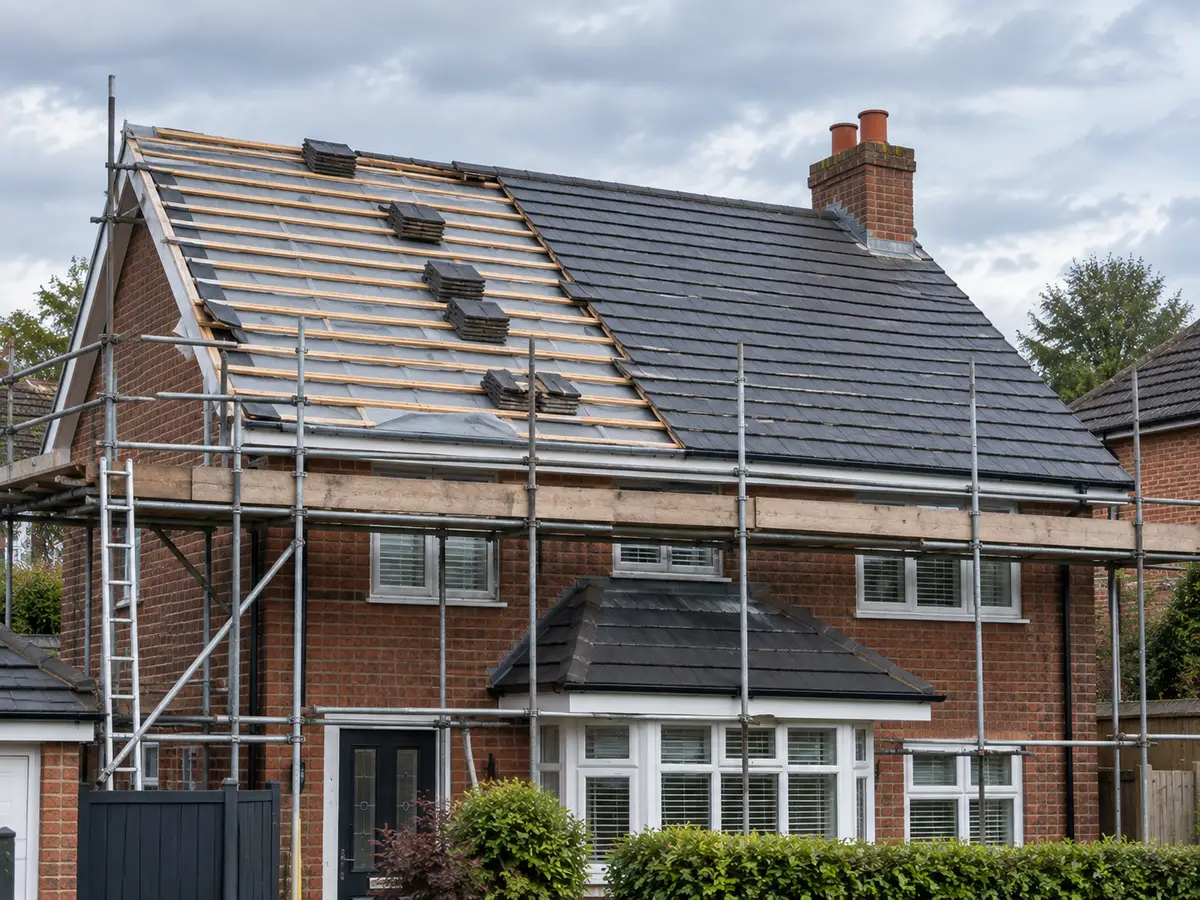
It's also worth separating the roof covering from the roof as a whole. A roof is really a system — structural timber, insulation, underlay/membrane, battens, and the visible covering on top — and each part has its own effective lifespan. The covering is usually the part that determines when a re-roof happens, since it's the part most directly exposed to weather, but the timber structure beneath it, if properly protected, often significantly outlasts several generations of covering.
This is genuinely reassuring context for anyone worried that an older property automatically means an imminent, expensive structural problem. In most cases, a roof reaching the end of its covering's lifespan is simply a covering replacement — the underlying structure, assuming it's been reasonably protected from moisture over the years, is often still perfectly sound and ready to support the next generation of covering for decades to come.
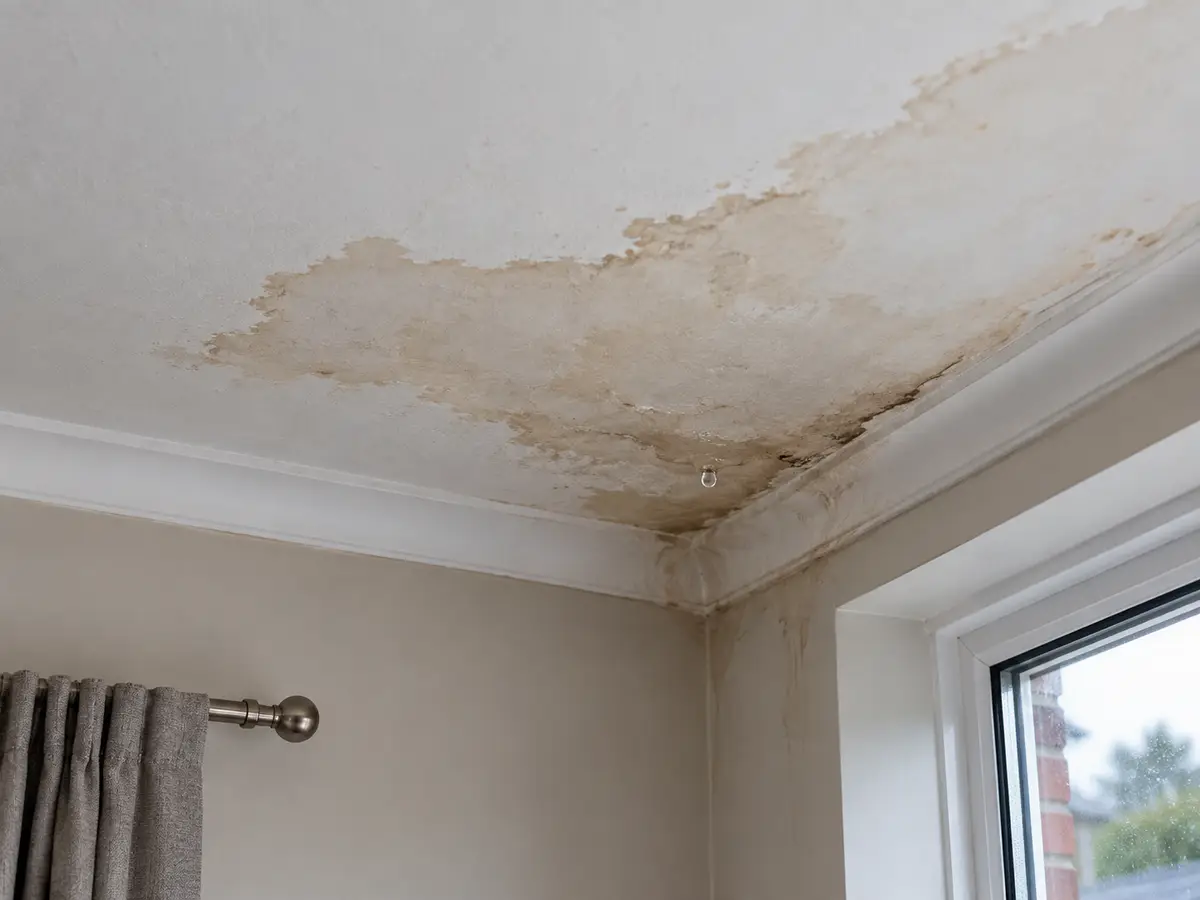
That said, it's the exception to this — a structure that hasn't been well protected, typically through prolonged unaddressed leaks — that tends to turn a straightforward re-covering into a more involved project. It's one more reason prompt attention to leaks, covered in our leak guide, matters for the roof's long-term prospects, not just the immediate inconvenience.
Typical lifespan by roofing material
General UK roof material lifespans
| Material | Typical lifespan | Notes |
|---|---|---|
| Natural slate | 80–100+ years | One of the longest-lasting common UK roofing materials; often outlasts the battens and fixings beneath it |
| Clay tile | 50–60 years | Traditional, especially in older properties; can last considerably longer with maintenance |
| Concrete tile | 40–60 years | The most common modern UK tile; colour coating may fade before the tile itself fails structurally |
| Natural wood shingles/shakes | 25–40 years | Less common in the UK; performance depends heavily on climate and maintenance |
| Felt (flat roof) | 10–20 years | Shorter lifespan than pitched materials; quality varies by number of layers and installation method |
| GRP fibreglass (flat roof) | 20–30 years | Seamless rigid surface, generally more durable than felt |
| EPDM rubber (flat roof) | 20–30 years in practice, manufacturer-rated up to 50 | Single-sheet membrane; real-world lifespan depends on installation and UV exposure |
| Metal roofing (standing seam) | 40–70 years | Less common on standard UK homes, more typical on extensions or commercial buildings |
General industry indicators based on typical performance under reasonable installation and maintenance — not a guarantee for any specific roof. Always have your actual roof assessed rather than relying on age alone.
What "lifespan" actually means in practice
It's worth being precise about what a lifespan figure describes, because it's easy to assume it means "stops working entirely" on a specific date, which isn't quite right. For most materials, it describes the period during which the covering is expected to perform its job reliably under normal conditions. Beyond that point, a roof doesn't necessarily fail outright — it typically becomes progressively more prone to problems, with the frequency and cost of repairs gradually increasing, until replacement becomes the more sensible option than continuing to patch it.
This is also why two different sources sometimes quote different lifespan figures for the same material — one might be describing the point at which a material is expected to need attention, another the point at which it's expected to be genuinely unfit for purpose. Treat any single figure, including the ones in the table above, as a reasonable planning guide rather than a precise cutoff.
Working out roughly how old your roof is
If you don't know your roof's age outright, there are a few reasonable ways to estimate it rather than starting completely blind.
- Property age is a starting point, but not a reliable one on its own — many UK roofs have been fully or partially replaced at some point since the property was built, sometimes more than once.
- Check any paperwork from when you bought the property — a seller's property information form or survey sometimes mentions roof works, even if only in passing.
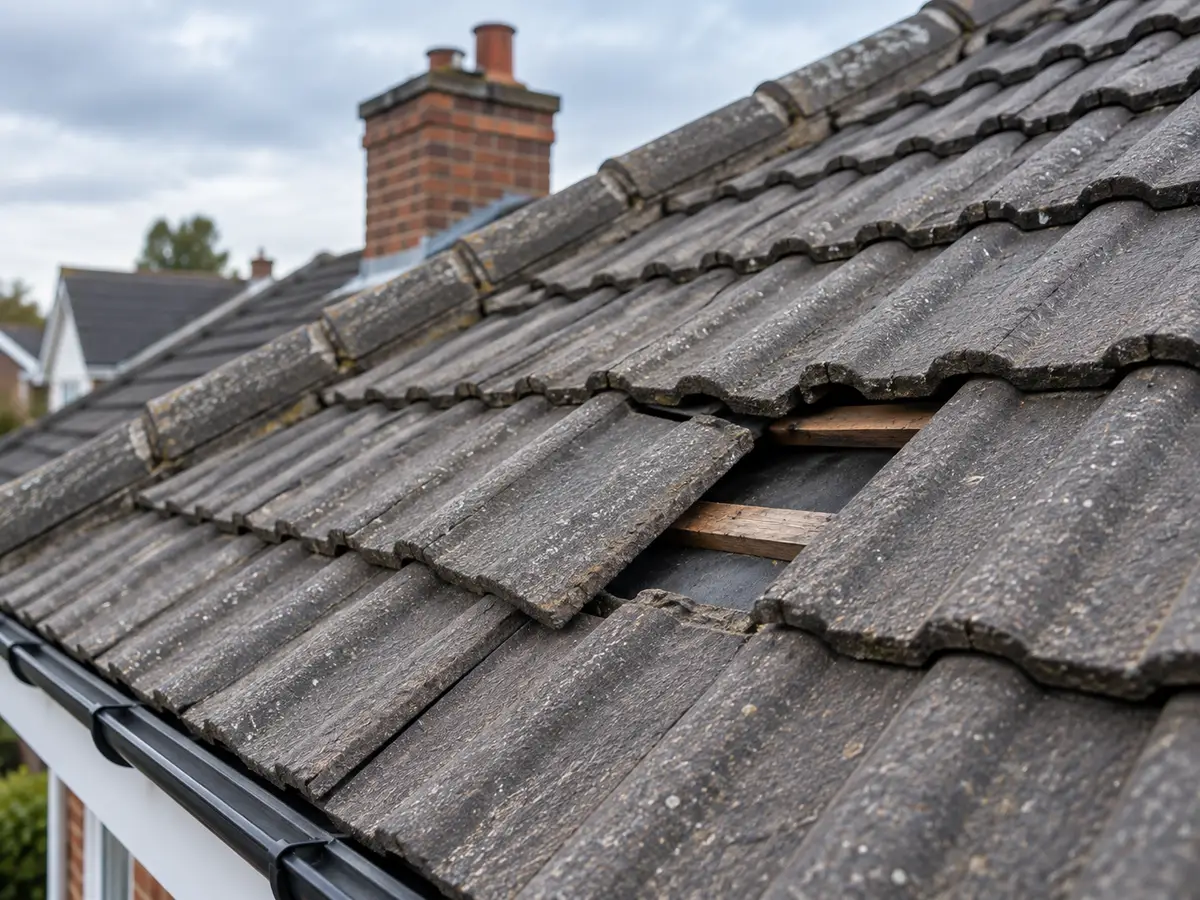
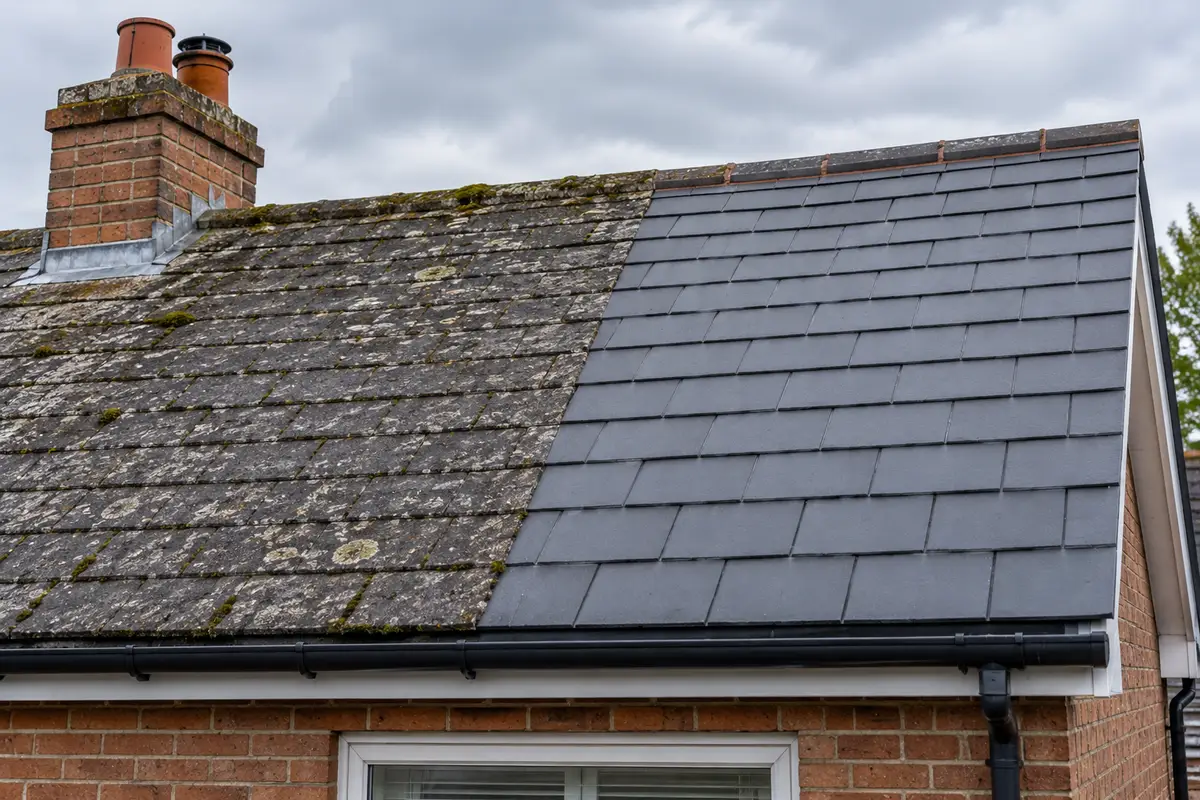
- Look for consistency in the tiles or slates — a uniform, unweathered appearance across the whole roof suggests a full replacement at some point, while a patchwork of slightly different-looking tiles often indicates partial repairs over time on an otherwise older roof.
- Ask neighbours with similar-age properties, particularly on a street where houses were built in a single development — it's common for whole terraces or estates to have been re-roofed around similar times.
- When in doubt, a roofing professional can often estimate a roof's approximate age from its condition and materials during an inspection, even without documented history.
None of these methods need to be exact — "roughly 20-30 years old" is a perfectly useful starting point, and far more useful than no estimate at all when thinking about where a roof might sit within its typical lifespan.
What shortens a roof's working life
- Poor original installation — even good materials underperform if fitted incorrectly, particularly around detailing like flashing and ridges.
- Lower-quality materials — cheaper options within any given material category tend to have a shorter practical lifespan than premium equivalents.
- Inadequate loft ventilation — trapped moisture from condensation can rot timber and degrade underlay from underneath, a problem that's often invisible until it's advanced.
- Lack of maintenance — small issues such as a slipped tile or a blocked gutter, left unaddressed, commonly develop into larger problems that affect surrounding areas of the roof.
- Severe or repeated weather exposure — a roof that's weathered several serious storms has typically aged faster than an equivalent roof in a more sheltered position.
- Overhanging trees — persistent moss and debris build-up from nearby branches traps moisture against the covering.
It's worth noticing that most of these factors are things that happened at, or soon after, installation, or things that accumulate gradually afterwards — very few roof lifespan problems come from a single dramatic event. This is actually good news in one sense: it means the factors within your control (maintenance, prompt small repairs, ventilation) genuinely do add up to a meaningful difference over the decades a roof is expected to last, even if no single action feels significant on its own.
What extends it
- Regular ground-level checks — see our roof inspection checklist for a simple routine.
- Prompt attention to small repairs, before they develop into bigger ones.
- Keeping gutters clear, so water drains away rather than backing up under the roofline.
- Good loft ventilation, which protects timber and underlay from moisture damage that isn't caused by rain at all.
- Periodic professional inspection, particularly once a roof passes the middle of its expected lifespan.
None of these individually feel dramatic, but taken together over a roof's multi-decade lifespan, they represent a meaningful difference between a roof that comfortably reaches its typical figure and one that falls noticeably short of it.
A couple of common myths worth clearing up
- "A roof needs replacing the moment it passes its typical lifespan figure." Not necessarily — the figure is an average, not a deadline, and plenty of well-maintained roofs perform well beyond it.
- "A more expensive material always lasts longer, so it's always worth paying more." Generally true as a pattern, but installation quality can outweigh material choice — a well-installed mid-range material often outperforms a poorly installed premium one.
- "Once a roof starts needing repairs, replacement is inevitable soon after." Not always — some roofs need one or two repairs and then perform well for years afterwards. It's the pattern and frequency that matters more than a single repair in isolation.
Thinking in cost-per-year, not just upfront cost
Materials with a longer typical lifespan usually cost more to install upfront, which can make a shorter-lived option look like the cheaper choice at first glance. Spread over the material's expected working life, though, the comparison often looks different — a roof that costs more initially but lasts twice as long can work out similar, or even better value, per year of use. This isn't a reason to always choose the longest-lasting material regardless of budget, but it's a genuinely useful way to compare options when you are weighing up a replacement, rather than looking at the initial quote in isolation.
This is worth bearing in mind alongside typical UK re-roofing costs if you're planning a replacement and deciding between material options.
UK climate and regional factors
Roofing materials perform differently depending on climate, and the UK's weather — frequent rain, freeze-thaw cycles in winter, and periodic high winds — is a reasonably demanding environment for a roof compared with drier, more stable climates. Coastal properties face additional salt-air exposure, which can accelerate wear on certain materials and fixings. None of this changes the general lifespan figures dramatically, but it's part of why "typical" ranges are ranges rather than fixed numbers — a roof in a sheltered inland location will often outperform an equivalent roof in an exposed coastal or hilltop position.
Why this matters for buying, selling or simply staying put
Roof lifespan is genuinely useful context for a few different situations beyond simply wondering whether to fix or replace right now.
- Buying a property — knowing roughly how old a roof is, and where that sits within its material's typical range, is a reasonable factor to weigh alongside the rest of a survey, since a roof nearing the end of its life represents a foreseeable future cost.
- Selling a property — being able to say when the roof was last replaced, or provide evidence of good condition, can be a genuinely useful, reassuring detail for buyers.
- Staying long-term — if you're planning to remain in a property for decades, understanding where your roof sits in its lifespan helps with realistic long-term budgeting, rather than a replacement arriving as an unplanned surprise.
- Renting out a property — landlords have a particular interest in avoiding unplanned roofing emergencies, making periodic condition checks a sensible part of property management.
How a roof usually signals it's nearing the end
Roofs rarely fail suddenly and completely — what usually happens is a gradual increase in the frequency of small problems. If you've needed two or three separate repairs within a couple of years, on a roof that's already past the middle of its material's typical lifespan, that pattern is often a more useful signal than the roof's age on its own. It's covered in more detail in our roof repair cost guide, in the section on repair versus replacement.
It's also worth watching for signs unrelated to the covering itself — sagging in the roofline can indicate the structural timber underneath is struggling, which is a different (and generally more serious) problem than the covering simply wearing out, and one that's covered in our guide to warning signs.
If you don't know what material your roof is
This is genuinely common, especially if you've moved into a property recently or the roof predates your ownership. A photo from ground level is usually enough for a roofing professional to identify the material, and from there, roughly where it might sit within its expected lifespan — though the only way to know its actual condition, rather than just its likely age bracket, is a proper inspection.
Frequently Asked Questions
My roof is older than its 'typical' lifespan but seems fine — is that normal?+
Yes, this happens regularly. The figures in the table above are averages, and well-installed, well-maintained roofs frequently outlast them. It's still worth having an inspection if the roof is well past its typical range, simply for peace of mind.
Does the colour fading on my concrete tiles mean the roof has failed?+
Not on its own. Colour coating on concrete tiles often fades well before the tile itself loses structural performance — it's usually a cosmetic sign of age rather than a functional problem.
Is it worth replacing a roof before it actually fails?+
This depends on your specific situation — condition, frequency of recent repairs, and your own plans for the property all factor in. A roof inspection is a useful, low-cost way to get an informed view before making that decision.
Do all parts of a roof age at the same rate?+
No — areas with more weather exposure (south/west-facing slopes in the UK, valleys, and areas near chimneys) often show wear before more sheltered sections of the same roof.
Does a longer warranty mean a longer actual lifespan?+
Not necessarily on its own — a warranty reflects the manufacturer's and installer's confidence and terms, but real-world lifespan still depends heavily on installation quality, ventilation and maintenance, as covered above.
Can I extend the life of a roof that's already past its typical lifespan?+
Sometimes, if the underlying structure and materials are still fundamentally sound — targeted repairs and improved maintenance can extend a roof's useful life further than the 'typical' figure suggests. An inspection is the only reliable way to know if this applies to your roof.
Does the roof structure (timber frame) have its own separate lifespan?+
Yes, and it's usually longer than the covering's — well-maintained roof timbers can last significantly longer than any single covering, which is why re-roofing (replacing the covering) is more common than replacing the whole roof structure.
Is it worth asking a seller for roof documentation when buying a property?+
Yes, if available — receipts, warranties or planning records relating to roof work give a more reliable picture than estimating from appearance alone, though it's common for this paperwork not to exist for older work.
Do roofs last longer in some parts of the UK than others?+
Generally, sheltered inland locations see less weather-related wear than exposed coastal or elevated positions, though this is one factor among several — installation quality and maintenance typically matter more than location alone.
Does a roof's lifespan affect home insurance?+
Some insurers ask about roof age or condition, particularly for older properties, as it can be a factor in risk assessment. It's worth checking your specific policy's requirements, as RoofEnquiry can't advise on individual insurance terms.