How Much Does Roof Repair Cost in the UK?
By RoofEnquiry Editorial · Updated 15 January 2026 · 10 min read
Quick answer
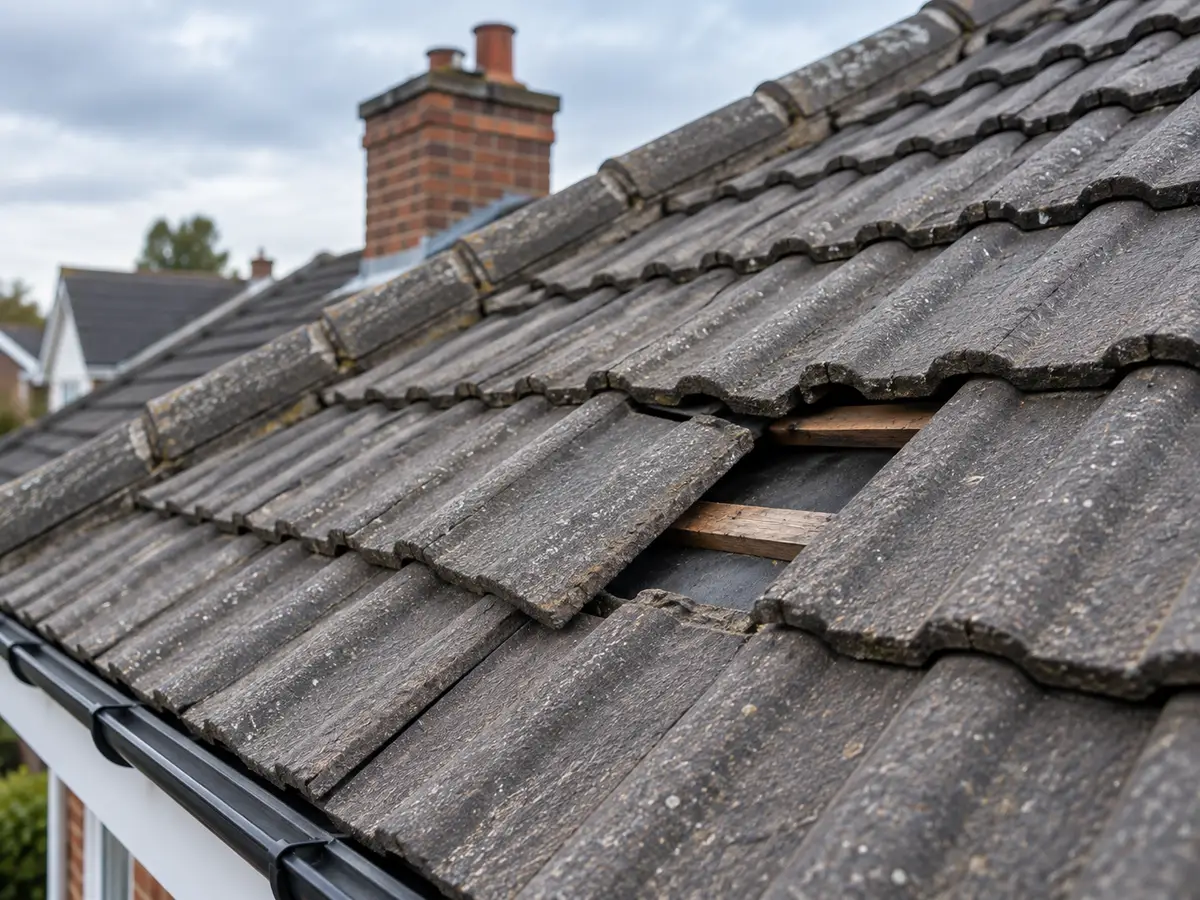
- Small repairs (a handful of tiles, a bit of flashing) typically fall somewhere between £150 and £600 in the UK.
- Bigger jobs — full re-felting a flat roof, extensive repointing, guttering replacement — usually run from £500 up to around £2,000.
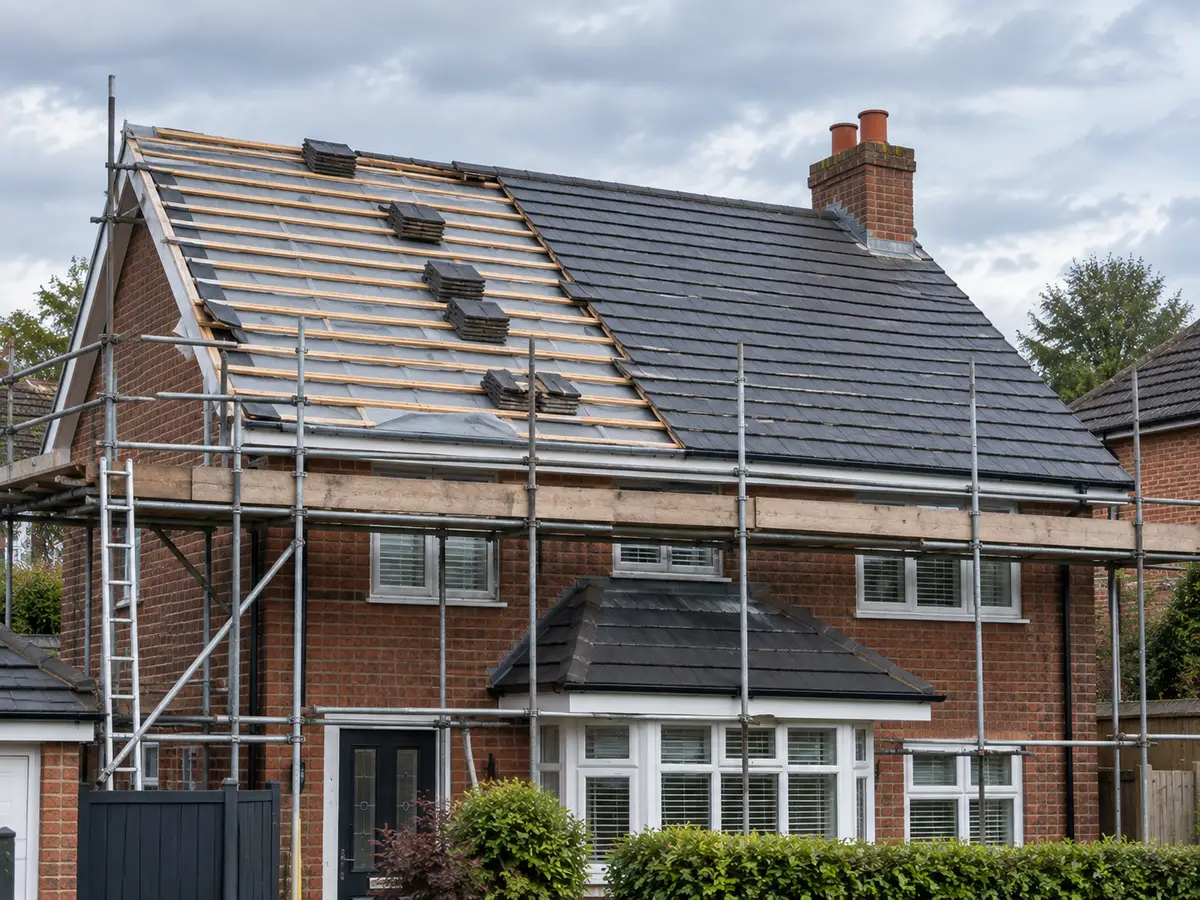
- A full re-roof on an average semi is commonly quoted somewhere in the £5,000–£12,000 range, though larger or more complex roofs go higher.
- These are general market indicators, not quotes — the only reliable price is one based on someone actually looking at your roof.
Why there's no single answer to this question
Every roofer who's been asked "how much will it cost to fix my roof?" over the phone has had to give some version of the same answer: it depends. That's not evasiveness — it's genuinely true. A roof repair isn't one job, it's a category that spans a ten-minute fix for a slipped tile right through to a multi-day project involving scaffolding, structural timber, and a skip.
The figures below are general UK market indicators for 2026, put together from typical ranges seen across the trade — not a price list, and not something any single roofer or platform can guarantee. Think of this page as a way to sense-check a quote once you have one, not as something to hold a roofer to.
With that context in mind, the table below is a genuinely useful starting point — it just needs to be read as a planning tool, not a promise.
General UK price ranges by repair type
These ranges are indicative only, based on typical UK trade pricing patterns. They generally exclude VAT and scaffolding unless stated, and they assume reasonably straightforward access. A roof that needs a scaffold tower or tower scaffold for a two-storey Victorian terrace will cost more to work on than a bungalow reachable from a standard ladder, regardless of how small the actual repair is.
Indicative UK roof repair price ranges (2026)
| Repair type | Typical UK range | What it usually includes |
|---|---|---|
| A few slipped or cracked tiles/slates | £150 – £400 | Diagnosis, replacement of a small number of tiles, basic access |
| Roof leak — find and fix | £200 – £600 | Investigation of the source plus the repair itself |
| Flashing repair (chimney or valley) | £200 – £550 | Removing old flashing, refitting or replacing with lead or an alternative |
| Chimney repointing | £500 – £1,500 | Raking out old mortar and repointing the visible stack |
| Small flat roof repair (patch) | £150 – £450 | Patching a localised area of felt, GRP or EPDM |
| Full re-felt, small flat roof (garage-sized) | £600 – £1,500 | Strip and replace the entire covering on a small flat roof |
| Guttering repair or partial replacement | £150 – £600 | Refitting, resealing joints, or replacing a short run |
| Full guttering replacement (whole property) | £800 – £2,000 | New uPVC guttering, downpipes and fixings around the property |
| Emergency tarpaulin / temporary cover | £150 – £400 | Short-term weatherproofing while a permanent repair is arranged |
| Full re-roof, average semi-detached | £5,000 – £12,000 | Strip, new underlay/battens, new covering, scaffolding |
| Full re-roof, larger detached property | £8,000 – £18,000+ | As above, scaled for a bigger roof area and more complexity |
Indicative UK ranges only, excluding VAT unless stated. Actual prices depend on property, access, materials and the specific roofer — always get an itemised quote for your job.
If you want a specific figure for your situation, the fastest route is describing the problem clearly (ideally with photos) so a roofing professional can give you something closer to a real number rather than a guess. You can start a roof repair enquiry in about a minute if you'd rather skip straight to that.
What actually moves the price up or down
The headline figure for "roof repair" hides a lot of variation, and most of that variation comes down to a fairly short list of factors. Once you know what they are, a quote that looks high (or suspiciously low) starts to make more sense.
- Access — a roof reachable from a ladder is a different job to one that needs a scaffold tower, and scaffolding alone can add several hundred pounds before any actual repair work happens.
- Roof pitch and height — steeper roofs and taller buildings need more safety equipment and take longer to work on safely.
- Materials — matching an existing tile or slate (especially on an older property) can cost more than using a standard modern equivalent, simply because reclaimed or specific materials are harder to source.
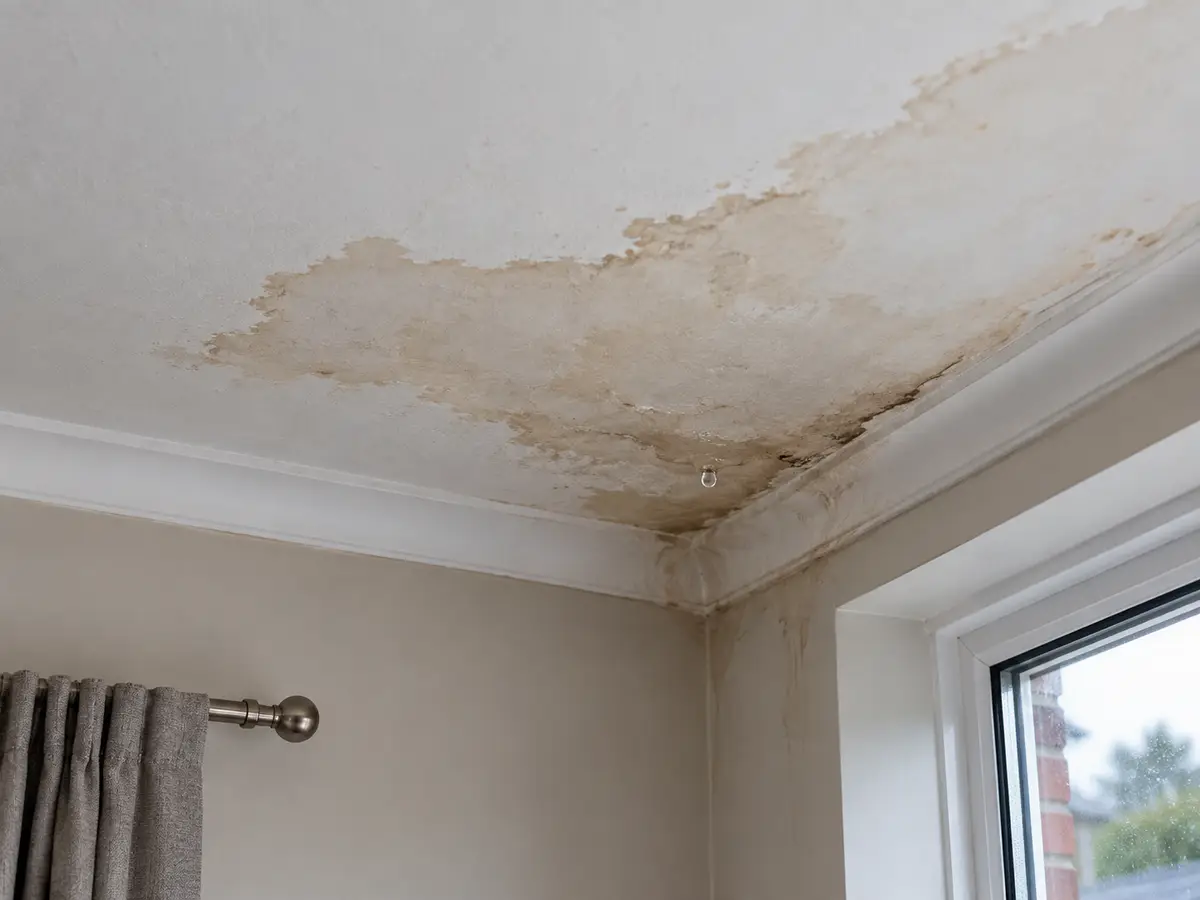
- What's underneath — sometimes a small visible problem (a damp patch, a slipped tile) turns out to be a symptom of something bigger, like rotten timber battens or degraded underlay, which only becomes clear once the roofer is actually up there.
- How urgent it is — genuine emergency callouts, particularly outside normal hours or during widespread storm damage periods when demand spikes, are sometimes priced differently to a routine booking.
- Where you are in the UK — labour rates in London and the South East are typically higher than in much of the North and Midlands, which feeds through to the final price.
What a roofer is actually pricing for
It helps to understand that a quote isn't just "how long will this take, times an hourly rate." A few different cost components sit inside almost every figure, even a small one, and knowing what they are makes a breakdown easier to make sense of if you ask for one.
| Cost component | What it covers |
|---|---|
| Labour | The time actually spent on your roof, plus travel to and from the job |
| Materials | Tiles, slates, flashing, sealant, felt, fixings — whatever the specific repair needs |
| Access equipment | Ladders for simple jobs; scaffold towers or full scaffolding for anything higher or more involved |
| Waste disposal | Removing and disposing of old materials, often via a skip or licensed waste collection for larger jobs |
| Overheads | Insurance, vehicle costs, and the general cost of running a trade business, spread across the price of the work |
| VAT | Added on top by VAT-registered businesses — worth checking whether a quoted figure already includes it |
None of this is unique to roofing — it's roughly how most trades price work — but it explains why two seemingly similar repairs can carry quite different price tags once you factor in that one needed a scaffold tower and a skip, and the other didn't.
Repair, or is it time to think about replacement?
There's a rough tipping point where repeated small repairs stop making financial sense compared with a full replacement, but it's genuinely rough — it depends on the age and condition of the whole roof, not just the bit that's currently failing. A single slipped tile on an otherwise sound 15-year-old roof is obviously worth just repairing. A roof that's needed three separate repairs in two years, on a covering that's already past its typical lifespan, is a different conversation.
One way people find this decision easier is to think in terms of cost-per-year rather than the upfront figure alone. A £400 repair on a roof with several more years of reasonable life left is straightforwardly good value. The same £400 repair on a roof that's likely to need another one in eighteen months, and another after that, starts to look different once you add those up against the cost of simply replacing the affected section or the whole roof once.
It's also worth separating two different questions that often get merged: "is this specific repair worth doing" and "is this roof, overall, near the end of its life." The first is usually a simple yes. The second is the one worth getting a proper opinion on, ideally from someone who isn't also the one quoting for the repair — which is one reason a separate, dedicated inspection can be useful rather than relying solely on a repair quote to also answer the bigger question.
If you're in that grey area, it's worth reading how long a roof typically lasts alongside this page, and possibly booking a proper roof inspection rather than guessing. An inspection costs far less than either a repair or a replacement, and it gives you an actual basis for the decision instead of a hunch.
Getting quotes that are actually worth comparing
The single biggest reason homeowners end up frustrated with roofing quotes isn't the price — it's that two quotes for "the same job" turn out to cover different things. One roofer's £400 might include scaffolding and a skip; another's £400 might be labour only, with materials and access charged separately once they've started.
- Ask whether the figure includes materials, labour, access equipment (ladder vs scaffold), waste disposal, and VAT.
- Ask what happens if they find additional damage once they're up there — how it would be priced and confirmed before extra work starts.
- Ask roughly how long the job will take, so you can sense-check whether the price reflects a half-day job or a multi-day one.
- Get more than one opinion where the job is significant — a second view on a five-figure re-roof quote is a small cost against a large decision.
Regional price differences across the UK
Roofing labour, like most trades, tends to cost more in London and the South East than in the North of England, Scotland, Wales or Northern Ireland — often somewhere in the region of 15–30% higher for comparable work, though this varies by trade and by how in-demand local roofers are at the time. That's a general pattern rather than a rule, and it can be outweighed by other factors like how many roofers are actively working in your immediate area.
If you're in North London — Enfield, Barnet or the surrounding areas — you're in a region where demand for roofing work is generally steady, which is worth bearing in mind when comparing a quote against a UK-wide average rather than a strictly local one.
Seasonal demand and why timing can affect price
Roofing demand in the UK isn't spread evenly across the year. Late autumn and winter tend to bring a spike in emergency and storm-related work, simply because that's when severe weather is most common, and roofers responding to genuine emergencies during a busy storm period sometimes have less flexibility on price or timing than during a quieter month. Conversely, booking planned, non-urgent work during a quieter period — often late spring or summer — can mean a bit more flexibility on both scheduling and, sometimes, price.
This isn't a reason to delay a repair that genuinely needs doing now — a small problem left over winter because you were waiting for a quieter, cheaper moment can easily turn into a bigger one. It's more relevant if you're planning ahead for non-urgent work, such as a full re-roof, where you have some genuine choice over timing.
A note on cheap quotes
It's tempting to treat the lowest quote as the best one, but roofing is one of those trades where unusually low pricing is worth a second look rather than an automatic yes. It can mean lower-quality materials, work that skips steps that don't show once the tiles are back on, or a price that's likely to grow once the job has started. None of that means the cheapest quote is always wrong — plenty of fair, competitively priced roofers exist — but it's a reason to ask the same detailed questions of a low quote as you would a high one.
A useful habit is comparing quotes on scope before comparing them on price. Once you know that two quotes cover exactly the same work, materials and access arrangements, the number itself becomes a much more meaningful comparison. Until then, the lower figure might simply be leaving something out.
Where RoofEnquiry fits into this
RoofEnquiry doesn't set or see final prices, and we don't carry out roofing work ourselves — we're an enquiry and matching service. What we can do is take a clear description of your problem, along with photos if you have them, and share it with independent roofing professionals covering your area, so the quote you eventually get is based on real information rather than a guess over the phone.
Frequently Asked Questions
Is roof repair covered by home insurance?+
It depends on the cause. Sudden damage from an event like a storm is often covered, while gradual wear and tear generally isn't. Check your specific policy and speak to your insurer directly — RoofEnquiry isn't able to advise on insurance cover.
Do I need to pay a deposit for roof repair work?+
Practices vary between roofing professionals. Some ask for a deposit on larger jobs to cover materials, others don't. It's reasonable to ask about payment terms before work starts, and to be cautious of requests for full payment upfront on a large job.
Why did my quote change after the roofer inspected the roof in person?+
Phone estimates are necessarily rough because the roofer hasn't seen the actual damage or access conditions. A revised quote after an in-person look is normal and usually more accurate — it's worth asking exactly what changed and why.
Can I get a roof repair done in winter?+
Yes, though some work (particularly anything involving adhesives, sealants or certain felt/GRP applications) can be weather-dependent. A roofing professional can advise on timing for your specific repair.
How much does it cost to just get a roof looked at?+
This varies by roofer — some offer free assessments as part of quoting for work, others charge a callout or inspection fee, particularly for detailed reports. It's worth asking upfront what an inspection involves and whether there's a charge.
Are London roof repair prices really higher than the rest of the UK?+
Generally, yes — labour costs in London and the South East tend to run higher than the UK average, often by somewhere in the region of 15–30% for comparable work, though this varies by trade and local demand at the time.
Should I get three quotes for every roof repair?+
For small, straightforward repairs, one clear quote from a professional you're comfortable with is often enough. For larger or more expensive work, a second opinion is a reasonable extra step, mainly to sense-check scope rather than just chase the lowest number.
Do roofers charge a call-out fee even if I don't go ahead with the work?+
Practices vary. Some roofing professionals offer free, no-obligation quotes as standard; others charge a call-out or assessment fee, particularly for more involved diagnostic visits. It's a reasonable question to ask before booking a visit.
Is it normal for prices to have changed since a few years ago?+
Yes — like most trades, roofing costs are affected by material prices and general labour cost inflation over time, so figures from a few years ago may no longer reflect current UK market conditions.
Are online instant roofing quote calculators accurate?+
Treat them as a very rough starting point at best. Roofing genuinely depends on factors — access, exact damage, materials, structural condition — that an automated calculator has no way of assessing without seeing the property, so an in-person or photo-based assessment will always be more reliable.
Does the age of my property affect roof repair pricing?+
Sometimes indirectly — older properties can have less standard roof shapes, more delicate original materials to match, or trickier access, any of which can affect price. It's not a direct rule, but it's part of why a specific quote for your property is more useful than a generic figure.