Solar Panels and Your Roof: What to Check Before Installing
By RoofEnquiry Editorial · Updated 24 September 2026 · 10 min read
Quick answer
- Solar panel installation is a specialist job, but the roof underneath still needs to be assessed as a roof first — condition, structure and material all affect whether it's ready.
- The single most expensive mistake is fitting panels to a roof covering that needs replacing within the next few years, since removing and reinstalling panels for a later re-roof adds real cost.
- Mounting brackets penetrate the roof covering, and that penetration is only as good as the flashing and sealing around it — the same underlying issue covered in our skylights guide.
- Not every roof needs planning permission for solar panels, but conservation areas, listed buildings and certain mounting positions are common exceptions worth checking first.
A specialist job that still depends on an ordinary roof
Solar panel installation is its own specialism, and this isn't a guide to choosing a solar installer or comparing panel technology — plenty of dedicated resources cover that ground well. What doesn't always get the same attention is the roof itself: the surface the panels are actually being fixed to, which needs to be sound, suitable, and correctly waterproofed at every point the mounting system penetrates it, regardless of how good the panels themselves are.
That's the gap this page fills. Solar panels don't replace the need for ordinary roofing knowledge — if anything, they raise the stakes on getting it right, since a problem discovered after panels are installed is more disruptive and expensive to fix than the same problem caught beforehand.
None of this is a reason to be cautious about solar panels themselves — they're a well-established, widely fitted addition to UK roofs, and the vast majority of installations go smoothly. It's simply that the roofing side and the electrical/generation side are genuinely separate disciplines, and a solar installer's expertise doesn't automatically extend to judging whether the roof covering underneath is the right candidate in the first place.
Timing: before or after a re-roof?
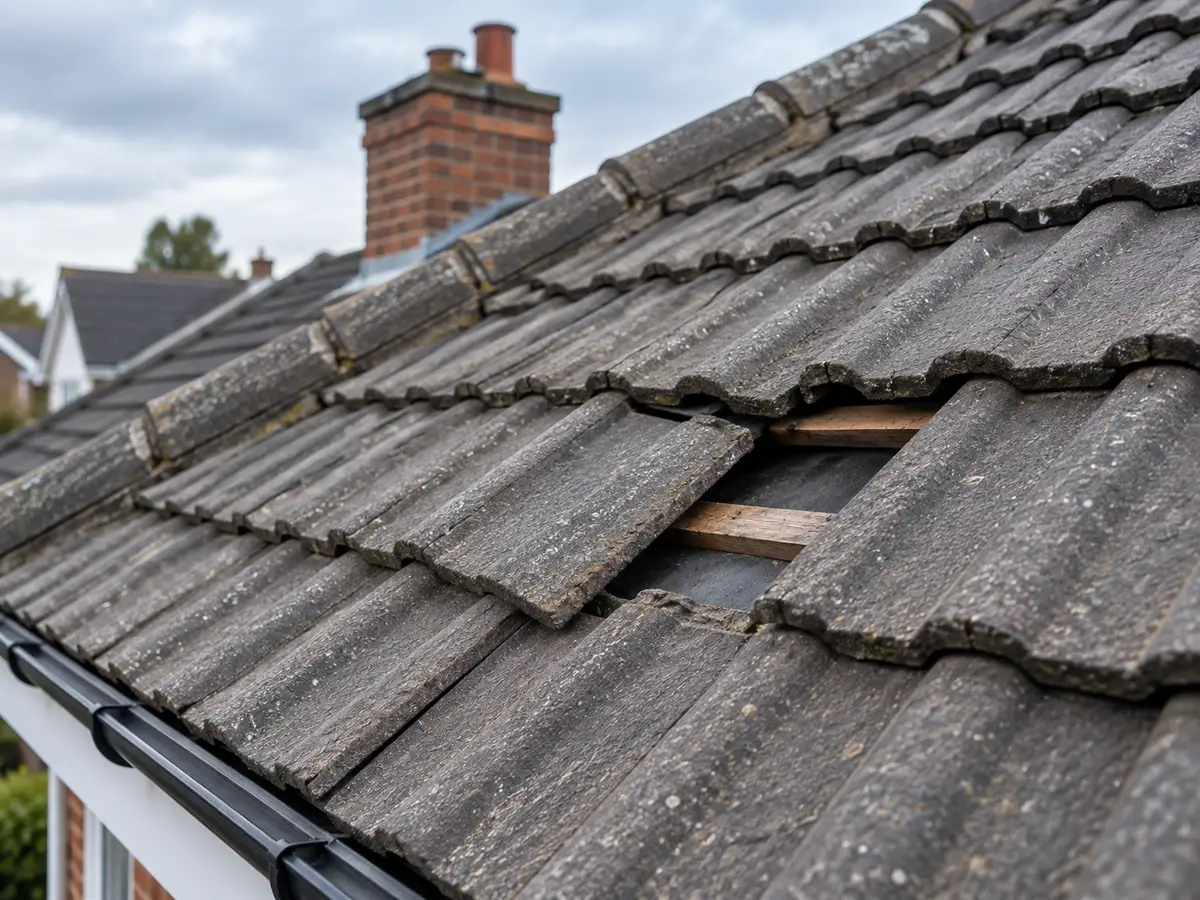
This is the single most consequential decision on this page, and it's worth getting right before anything else. If a roof covering is getting close to the end of its typical working life or you already suspect it will need attention within the next several years, installing solar panels on it first is generally a mistake — the panels will need to be removed and reinstalled when the re-roof eventually happens, which adds a genuinely avoidable cost on top of the re-roof itself.
- A roof that's early-to-mid life for its material is generally a safe candidate for solar panels without this concern applying.
- A roof that's within or past its typical working-life range is worth having properly assessed first — our lifespan estimator gives a quick indicative read based on material and age.
- If a re-roof is likely within the panels' own expected working life (commonly 25+ years for the panels themselves), it's almost always more cost-effective to do the re-roof first, then install panels onto the new covering.
- This is exactly the kind of decision worth raising with a roofing professional independently of the solar installer, since the solar installer's focus is naturally on the panels rather than the wider lifespan of the covering underneath.
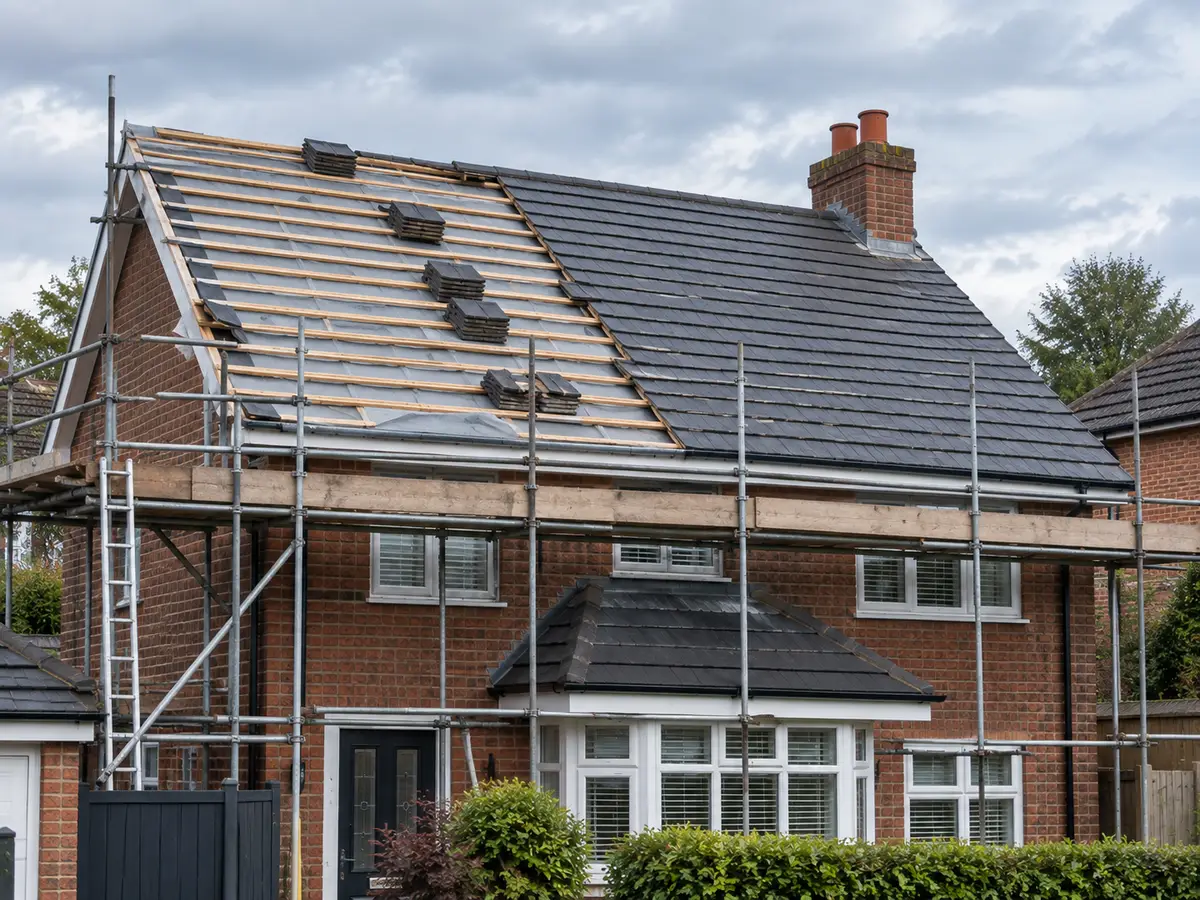
The reverse situation is genuinely ideal: a roof that's just been re-covered, or is due to be, is the best possible moment to add solar panels, since the covering is fresh, its remaining working life is at its longest relative to the panels, and any access equipment already up for the re-roof can often be used for the solar installation too — the same efficiency logic covered in our scaffolding guide for bundling jobs that need the same access.
Structural considerations
Solar panels add both weight and wind-loading to a roof structure that wasn't necessarily designed with them in mind, particularly on older properties. A structural assessment — usually arranged by the solar installer, but worth confirming rather than assuming — checks that the rafters and roof structure can safely carry the additional load, including the extra wind uplift force a large flat panel surface can experience in exposed or elevated locations.
Roof pitch and orientation matter for solar generation efficiency, which is squarely the solar installer's area, but pitch also affects how mounting brackets and waterproofing details perform — a very shallow or unusually steep roof can call for different fixing details than a standard pitch, which is worth flagging early rather than discovering mid-installation.
Does the roof material matter?
Yes, and it affects both mounting method and cost. Our materials guide covers each of these coverings in more general depth; here's how they specifically interact with solar mounting.
| Roof covering | How solar mounting typically works |
|---|---|
| Concrete or clay tile | Roof hooks fitted under selected tiles connect to a mounting rail — a well-established, widely used method |
| Natural slate | Similar hook-based systems exist, but slate's brittleness means fitting needs particular care, and cost is often somewhat higher |
| Metal roofing (standing seam) | Often mounted with clamps that grip the seams directly, avoiding new penetrations through the covering entirely — a genuine advantage of this material for solar |
| Flat roofs (felt, GRP, EPDM) | Typically use a ballasted mounting frame that sits on the surface rather than penetrating it, avoiding new holes in the membrane, though this adds weight that needs checking against the structure |
A roofing professional or solar installer can confirm which approach suits your specific roof — this is a general guide to what's typical, not a specification.
Waterproofing at every mounting point
Every bracket, hook or fixing that penetrates a roof covering creates exactly the same underlying challenge covered in our skylights guide: a small, complex junction has to do the waterproofing job that the surrounding covering does over a much larger, simpler area. The same logic applies here — the flashing and sealing detail around each fixing point matters more than almost anything else in the installation for the long-term health of the roof underneath.
- Roof hooks on a tiled or slated roof should be fitted with a proper flashing detail at each point, not just sealed with sealant alone, which degrades faster than a mechanical flashing detail.
- Any cabling that passes through the roof covering to reach an inverter or the property's electrics needs its own properly sealed entry point — a detail that's easy to overlook when the visible focus is on the panels themselves.
- Ballasted flat roof mounts still need checking that the underlying membrane isn't being damaged by weight distribution or abrasion at contact points, even without new penetrations.
- It's reasonable to ask a solar installer directly what flashing or sealing method they use at each fixing point, in the same way you'd ask about a skylight's flashing kit.
Inverters, cabling and the loft
The part of a solar installation that ends up in the loft is easy to overlook when the visible focus is on the panels themselves, but it interacts directly with roof health. Inverters are commonly mounted in the loft space, generate a small amount of heat during operation, and the cabling connecting them to the panels has to pass through the roof structure somewhere.
- Cable entry points through the roof covering need their own proper seal, in addition to the mounting brackets themselves — an easy detail to miss when attention is on the panels.
- An inverter shouldn't be positioned in a way that blocks existing eaves or ridge ventilation — exactly the airflow path covered in our loft ventilation guide, and one that's straightforward to disrupt accidentally when new equipment is being fitted into an already-tight loft space.
- If loft insulation needs adjusting to accommodate cabling or the inverter, it's worth checking this hasn't inadvertently pushed insulation into the eaves and blocked low-level vents — one of the most common causes of a ventilation problem covered in that same guide.
Solar panels and existing roof warranties
A relatively new roof covering typically comes with the two types of cover described in our roof replacement guide — a manufacturer's materials warranty and an installer's workmanship guarantee. Adding solar panels afterwards, with a different company drilling into or fixing onto that covering, can interact with those warranties in ways worth checking before work starts rather than after.
It's a reasonable and specific question to ask both the original roofing contractor (if the warranty documentation doesn't already answer it) and the solar installer directly: does this installation affect the existing roof warranty, and does the solar installer's own workmanship guarantee cover the roofing work involved in fitting the mounts, not just the panels and electrics. Getting this in writing before installation is far more useful than trying to establish it after a problem has already appeared.
Planning permission
Many domestic solar panel installations fall under permitted development in the UK and don't need planning permission, but there are common exceptions worth checking before committing, in the same way planning considerations apply to a re-roof.
- Listed buildings almost always need consent for solar panels, regardless of position.
- Conservation areas can restrict panel positioning, particularly on a roof slope facing a public road.
- Panels projecting more than a set distance above the roof plane, or exceeding certain size limits, can move an installation outside permitted development.
- Flats and maisonettes often have different rules to houses, and leasehold or freehold arrangements can add an extra layer of permission needed from a landlord or management company.
It's worth checking with your local authority directly rather than assuming — a reputable solar installer should also be able to advise, but the responsibility for compliant installation ultimately sits with the property owner. Our free planning permission checker gives a rough read on this specifically for a solar installation before you make that call.
Living with panels: maintenance and roof access
Panels don't remove the need for ordinary roof maintenance — if anything, they make a couple of things worth thinking about differently.
- Moss and debris can collect at the lower edge of a panel array in the same way it collects in a valley or gutter, and this area is easy to overlook during a routine ground-level check since the panels themselves partially hide it from view.
- Guttering below a panel array can see more concentrated runoff during heavy rain, since the panel surface sheds water faster than a tiled roof would in the same footprint.
- Roof access for any other work — a chimney repair, general maintenance, or eventually a re-roof — needs to account for the panels and their cabling, which is worth mentioning specifically when arranging scaffolding or other access for unrelated work.
- If a roofing professional needs to access a section of roof covered by panels for an unrelated repair, temporarily removing and refitting the affected panels is sometimes necessary — a cost worth asking about if a repair is needed on a panel-covered roof.
Panel cleaning is worth a specific mention too. Most UK roofs get enough natural rainfall to keep panels reasonably clear without dedicated cleaning, but a heavily shaded roof, one near overhanging trees, or a very low-pitch installation can accumulate grime or moss growth that measurably affects output over time. This is a job that involves exactly the same access and safety considerations as any other roof work — not one to attempt with a hose and a long-handled brush from ground level.
If the roof underneath needs repair later
A leak or damage discovered on a section of roof covered by panels is a more involved repair than the same issue on an uncovered section, simply because the affected panels need to come off, the repair carried out, and the panels refitted afterwards — with the same waterproofing care needed as the original installation. This is worth factoring into general expectations rather than being a surprise: our leak guide covers general diagnosis and next steps, and it's worth mentioning the presence of panels clearly when describing the problem, since it affects both access and the scope of the repair.
This is also part of why the timing point earlier in this page matters so much — a roof covering that's already close to needing replacement, with panels newly fitted on top, is a genuinely awkward position to be in if a problem develops before the panels have had a chance to pay for themselves.
None of this means panels and an ageing roof are automatically incompatible — sometimes the numbers still make sense, particularly if a full re-roof genuinely isn't imminent despite the covering being past its typical range. It simply means going in with a clear-eyed view of the roof's actual condition, rather than assuming the roof question has already been answered because the solar side has been thoroughly researched.
Getting it looked at
Whether you're assessing whether your roof is ready for solar, dealing with a problem on a roof that already has panels, or planning a re-roof alongside a solar installation, the details that help most are the roof's age and material, whether panels are already fitted, and what specifically you've noticed. Our guide on what information to give a roofer covers this in more general detail.
Frequently Asked Questions
Should I get my roof checked before installing solar panels?+
Yes — it's worth having the roof's condition and remaining working life assessed independently before committing, particularly if it's an older roof, since removing and refitting panels for a later re-roof adds avoidable cost.
Do solar panels damage a roof?+
Not if installed correctly — the risk comes from poor flashing or sealing at mounting points, or fitting panels to a roof covering that's already close to the end of its working life. A competent installation on a sound roof shouldn't cause damage.
Can solar panels be fitted to any roof material?+
Most common UK materials can accommodate solar panels with the right mounting method — tile and slate typically use roof hooks, metal roofing often uses seam clamps, and flat roofs typically use a ballasted frame. The right approach depends on your specific roof.
Do I need planning permission for solar panels?+
Many domestic installations fall under permitted development, but listed buildings, conservation areas, and panels beyond certain size or projection limits are common exceptions — worth checking with your local authority first.
What happens if my roof needs repair after panels are installed?+
The affected panels typically need to be temporarily removed for the repair and refitted afterwards, which adds cost and complexity compared with repairing an uncovered section of roof.
Is it more expensive to fit solar panels to slate than to tile?+
Often somewhat, yes — slate's brittleness means fitting needs particular care compared with more standard tile mounting methods, though the difference varies by installer and roof.
Do flat roof solar panels need to penetrate the membrane?+
Not usually — flat roofs commonly use a ballasted mounting frame that sits on top of the membrane rather than fixing through it, though the added weight still needs checking against the roof structure.
Should I install solar panels before or after a planned re-roof?+
After, in almost all cases — fitting panels to a roof covering that will need replacing within the panels' own working life means paying twice for the same access and labour to remove and refit them.